

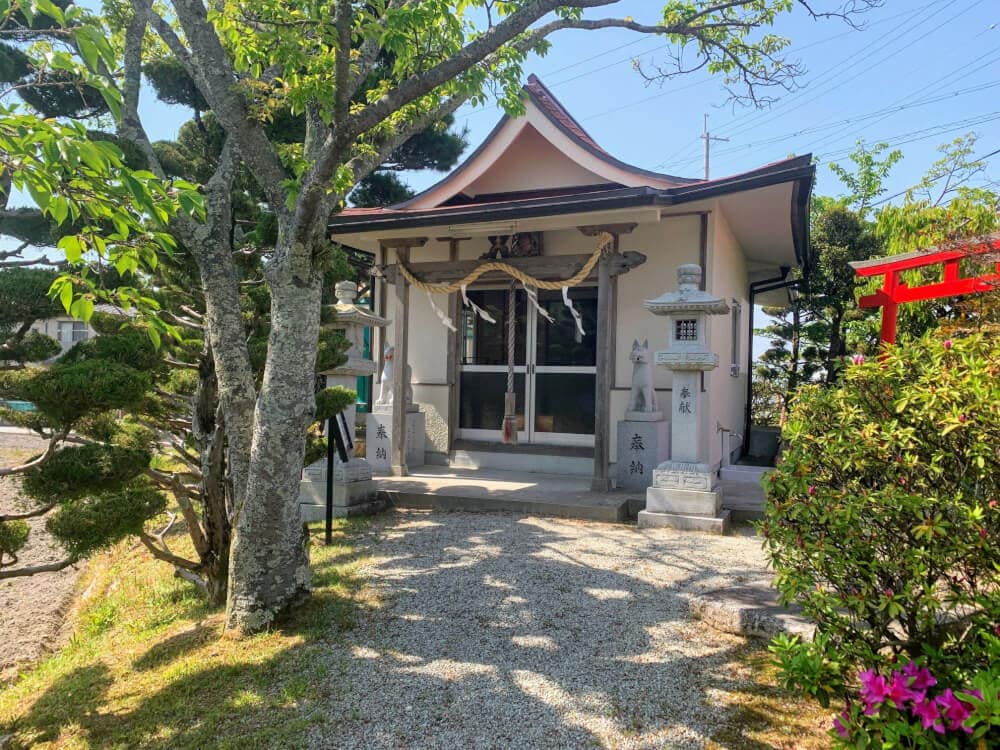

Is “秀吉大明神” an Inari shrine? A fox welcomes you \(^o^)/
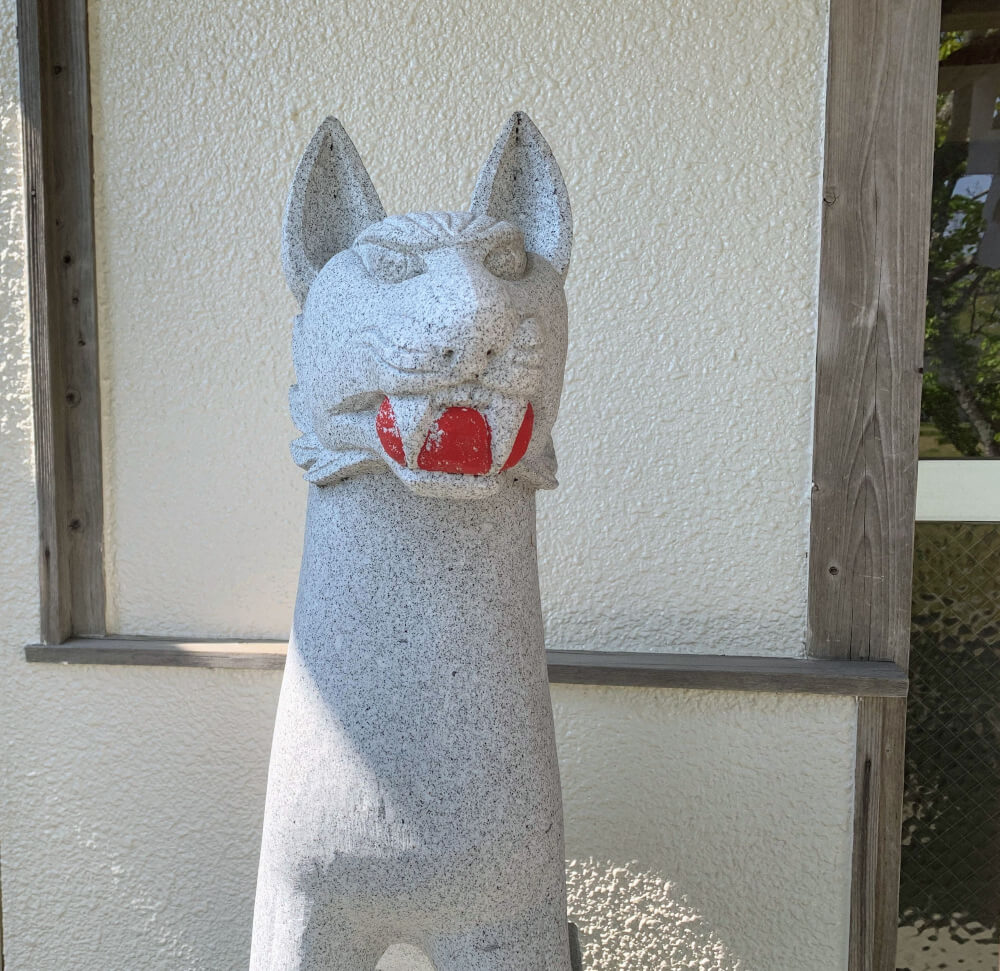
The fox on the left is holding something red in its mouth.
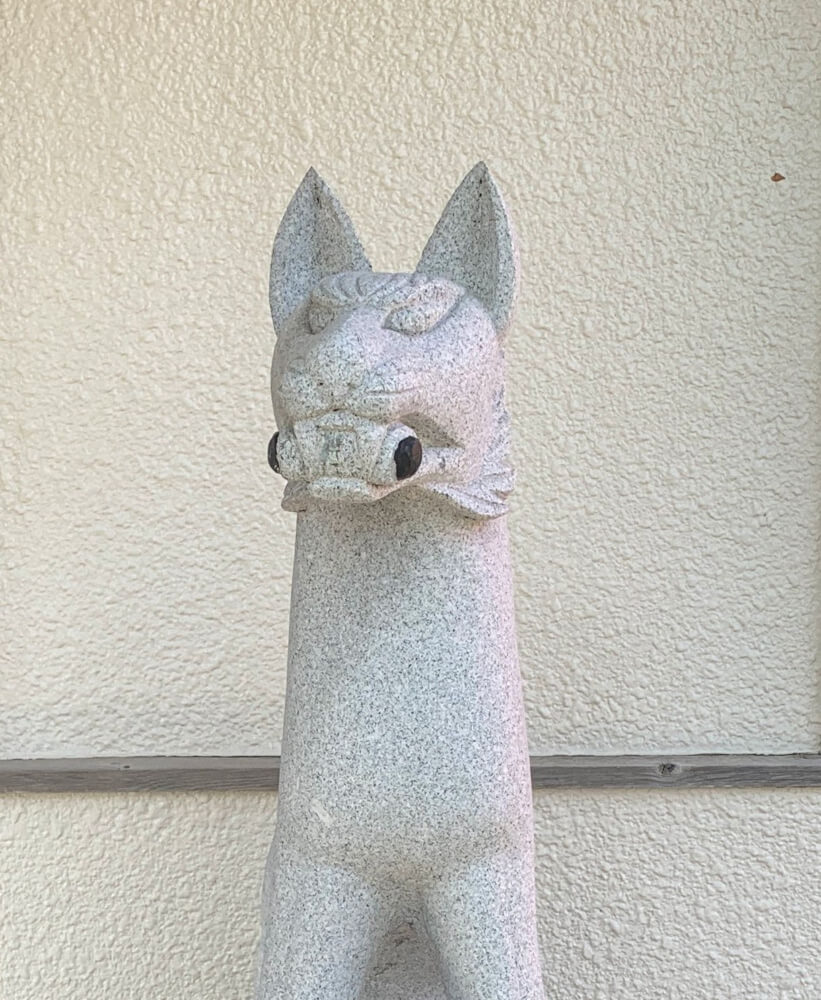
The fox on the right is holding something black in its mouth.
When I looked it up, it seems foxes can be holding all kinds of things, but
the hoju sacred jewel (the red one) symbolizes the fulfillment of wishes, and the scroll (the black one) seems to represent Buddhist scriptures ヽ(^o^)丿
According to Okumiya, a shrine-focused media site, there are about 80,000 shrines across Japan, and some data suggests that more than 30,000 of them are Inari shrines.
Since Inari shrines are dedicated to the deity of agriculture, one theory says foxes were regarded like guardian spirits because they came down to the villages in early spring when rice planting began, then returned to the mountains in autumn after the harvest !(^^)!
I was heading for “秀吉大明神,” but when I took a photo…
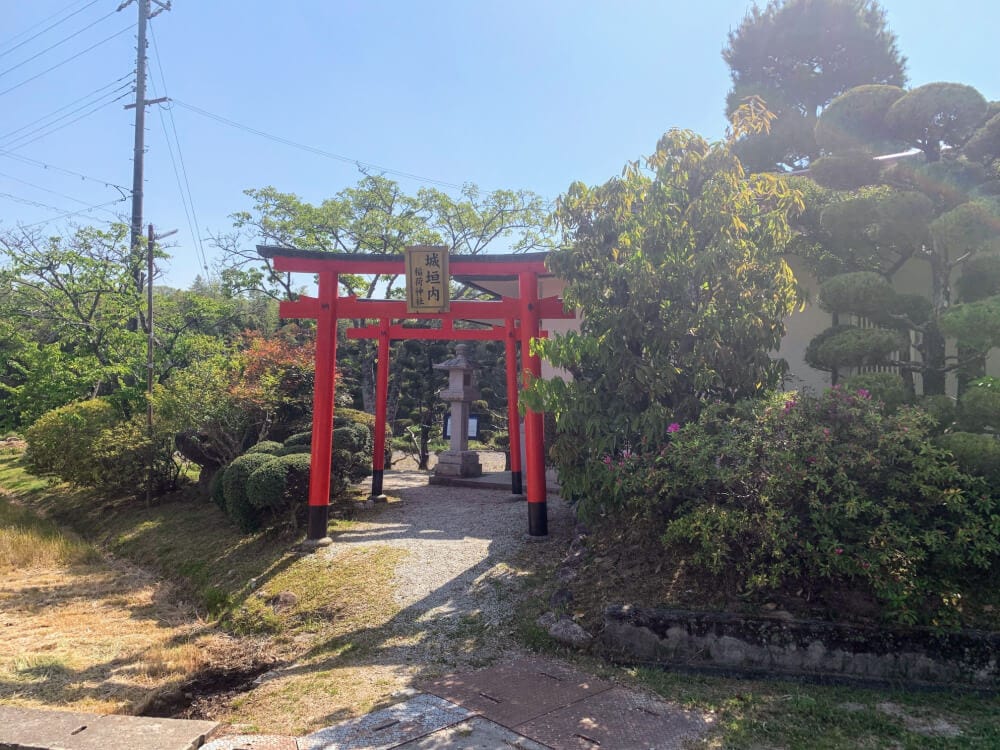
Wha— the name is different (-_-;)
At “秀吉大明神”, there was a sign that said “城垣内稲荷神社” ^^;
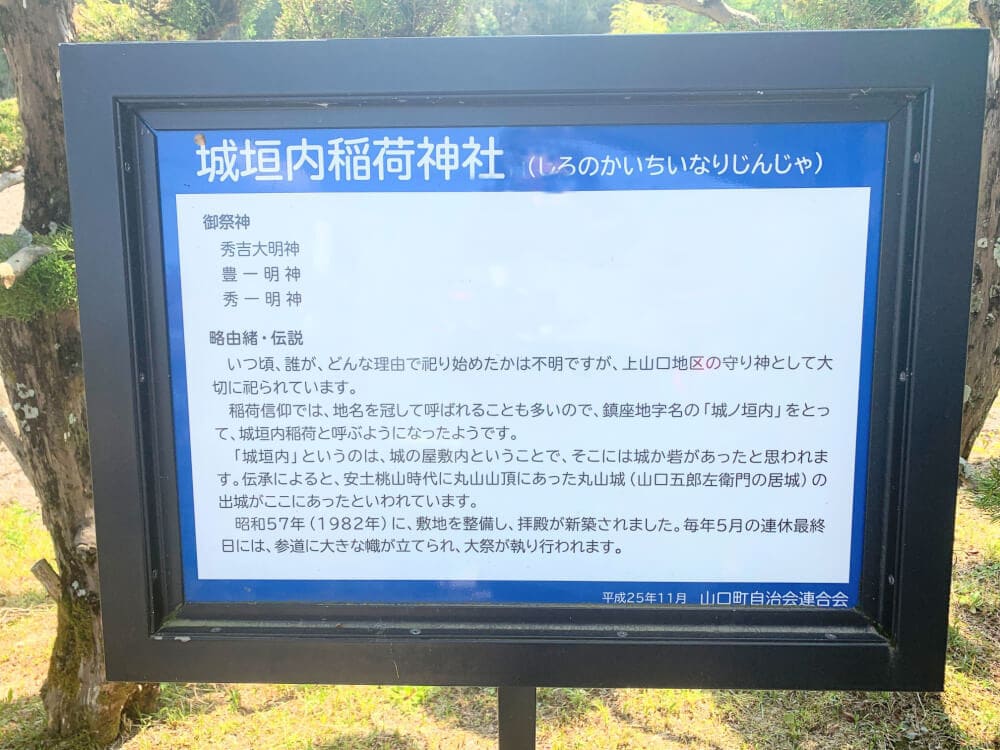
But on the map below, it’s listed as “秀吉大明神” ^^;
I wondered why, so I looked it up ↓
Captured from the Yamaguchi-cho website
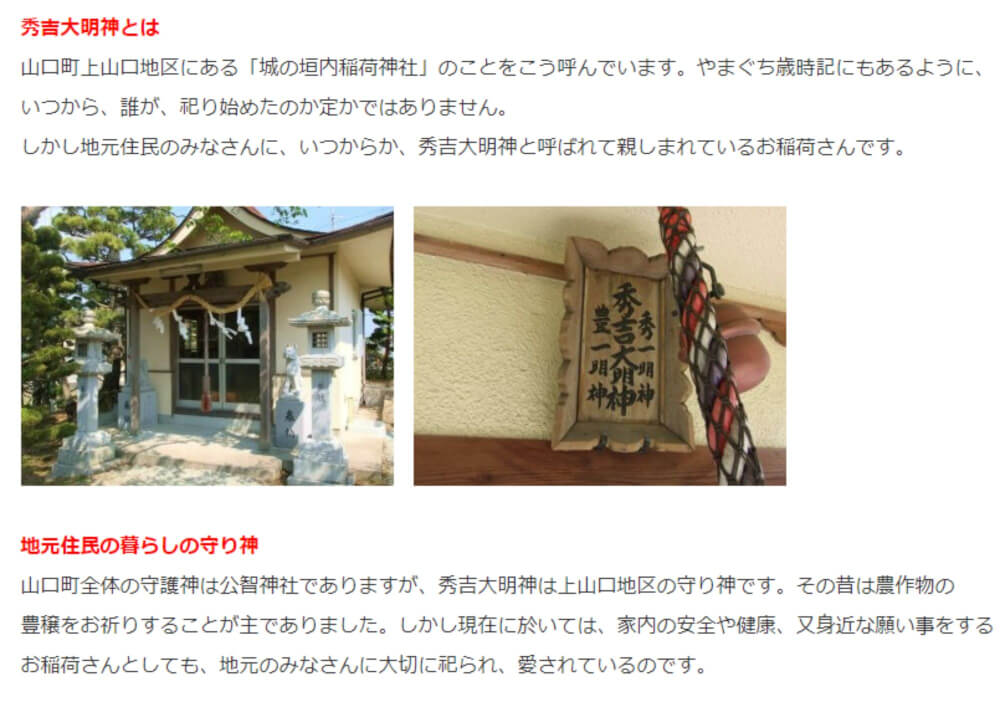
It said, “At some point, this beloved Inari shrine came to be called Hideyoshi Daimyojin.” ヽ(^o^)丿
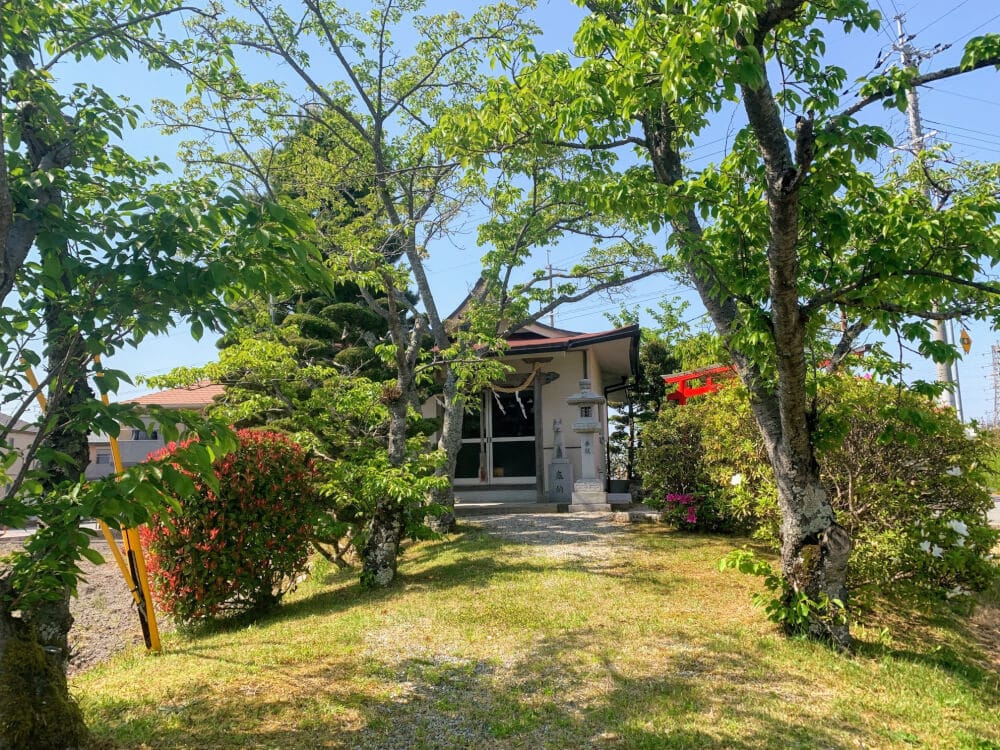
“秀吉大明神,” enshrined in the middle of the rice fields, is kept incredibly clean and well maintained, and you can tell that the people of the Kamiyamaguchi area really treasure it \(^o^)/When you hear Hideyoshi, Toyotomi Hideyoshi comes to mind, but I couldn’t tell whether there’s any connection or not (・_・;) It’s called Hideyoshi Daimyojin, but the deities enshrined here are Toyoichi Myojin and Hideichi Myojin… if I had to point to one thing, maybe the shared “Toyo” character is the connection !(^^)!
Still, I’m always impressed by how beautifully maintained the shrines in Yamaguchi-cho are whenever I visit (#^.^#)