


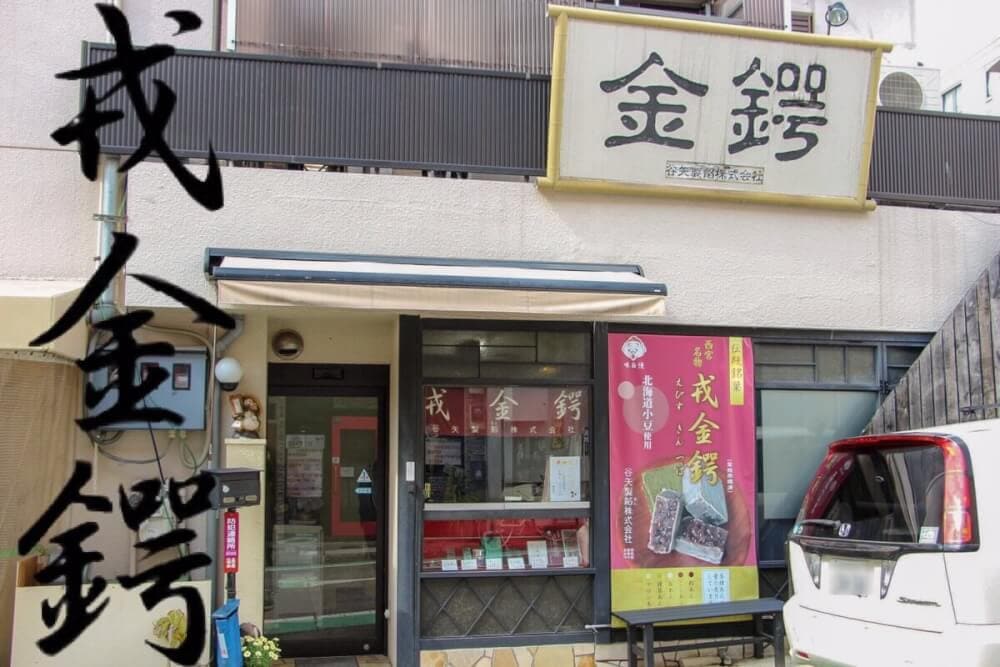

The shop we’re introducing this time is
谷矢製餡(Taniya Seian), located near Hanshin Nishinomiya Station!

谷矢製餡
★Business hours 【Monday-Friday】
8:00-17:00
【Saturday and holidays】
8:00-14:00
★Closed Sunday
★Phone 0798-22-4328
★Address 兵庫県西宮市本町8番1号
★Parking None
★Related links
Website / Tabelog
(*Prices, menu items, business hours, etc. are as of the time of our visit. Please contact the shop directly for the latest information.)
Show us the shop!
Taniya Seian, thanks for having us!
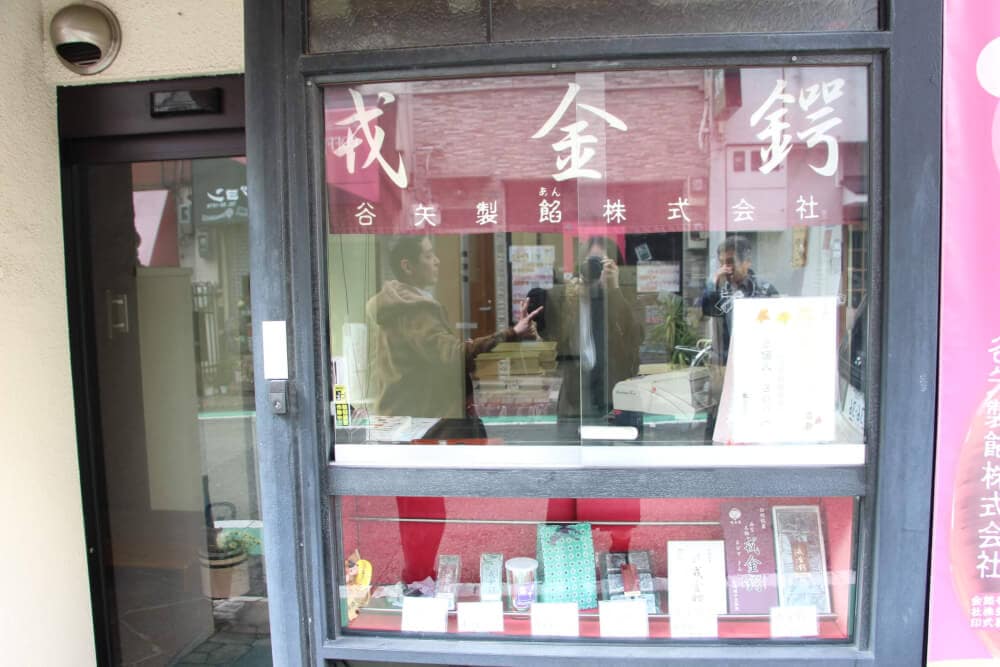
The place where you can buy Ebisu Kintsuba is this area facing the outside.
So what kinds of products do they have…?
(Prices are current as of February 2019.)
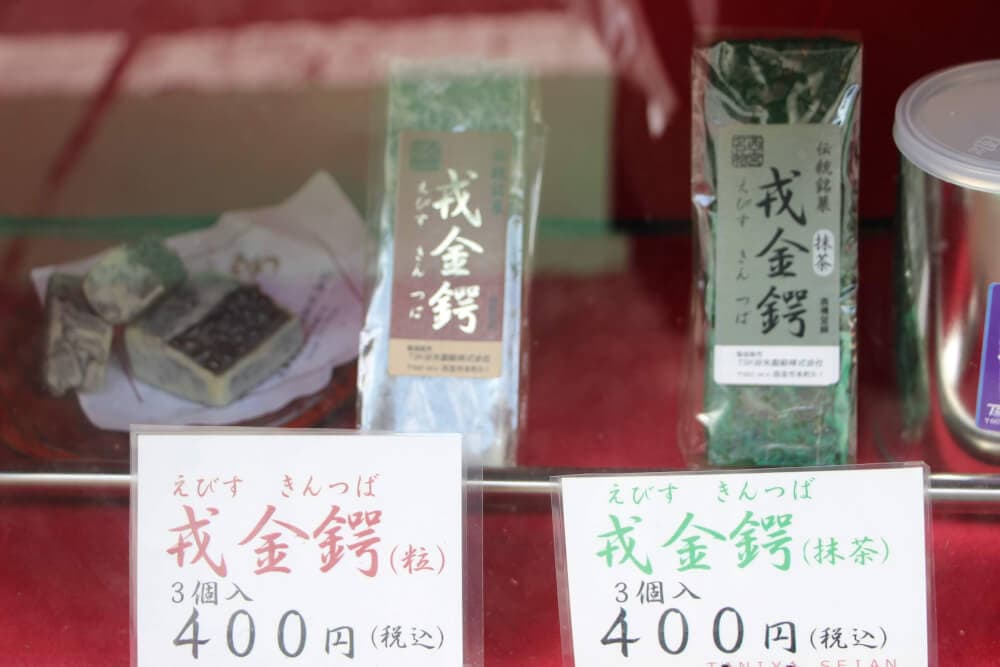
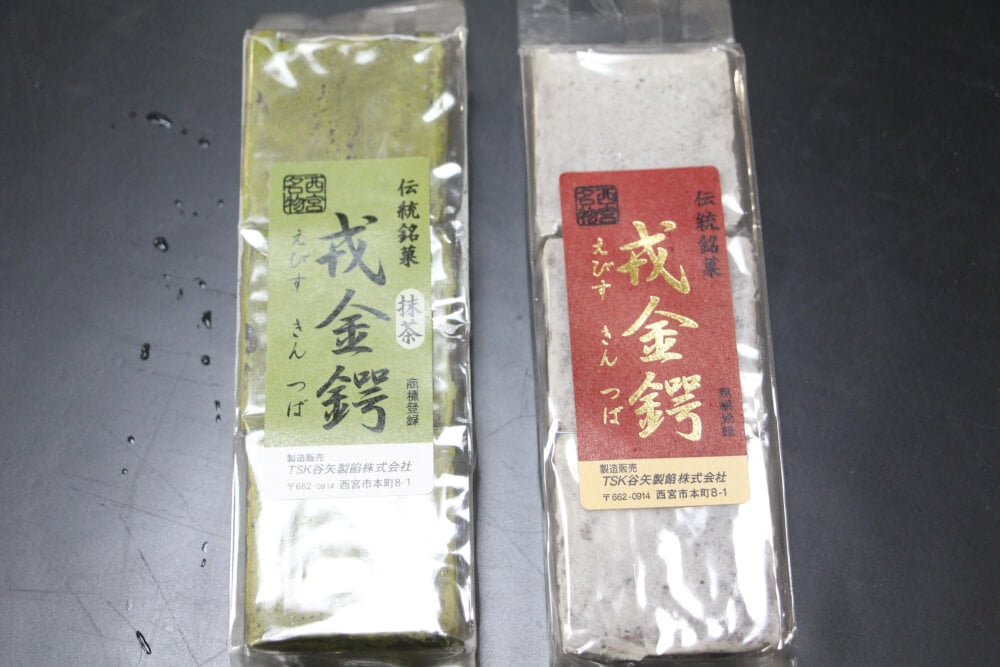
- Ebisu Kintsuba (chunky sweet bean paste), 3 pieces ¥400 (tax included)
- Ebisu Kintsuba (matcha), 3 pieces ¥400 (tax included)
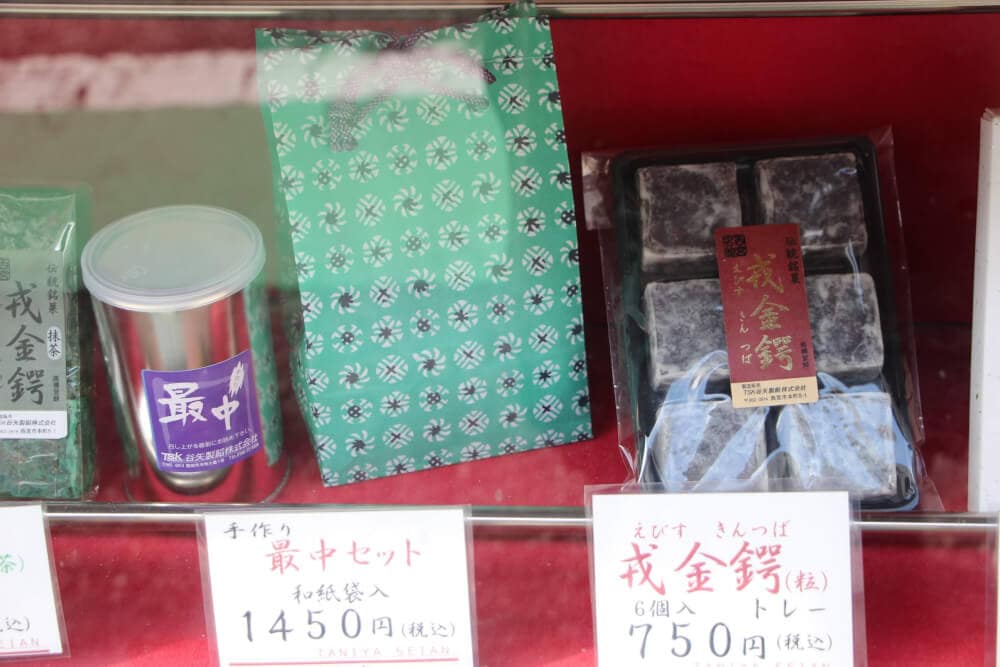
- Handmade monaka set (in a washi paper bag) (400g chunky sweet bean paste, 10 pairs of wafers) ¥1450 (tax included)
- Ebisu Kintsuba (chunky sweet bean paste), 6 pieces ¥750 (tax included)
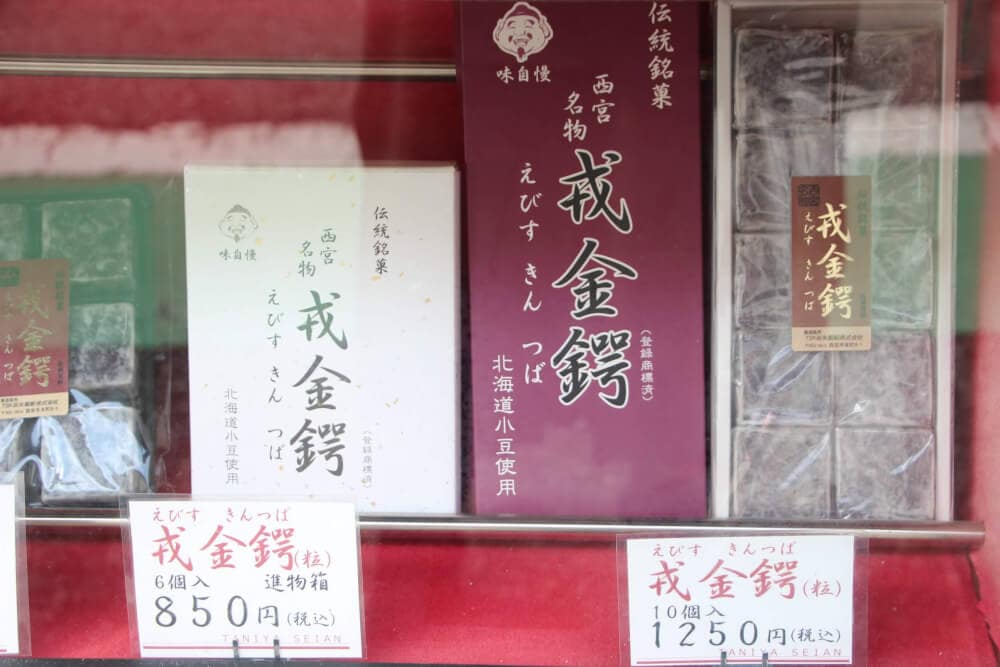
- Ebisu Kintsuba (chunky sweet bean paste), 6 pieces ¥850 (tax included)
- Ebisu Kintsuba (chunky sweet bean paste), 10 pieces ¥1250 (tax included)
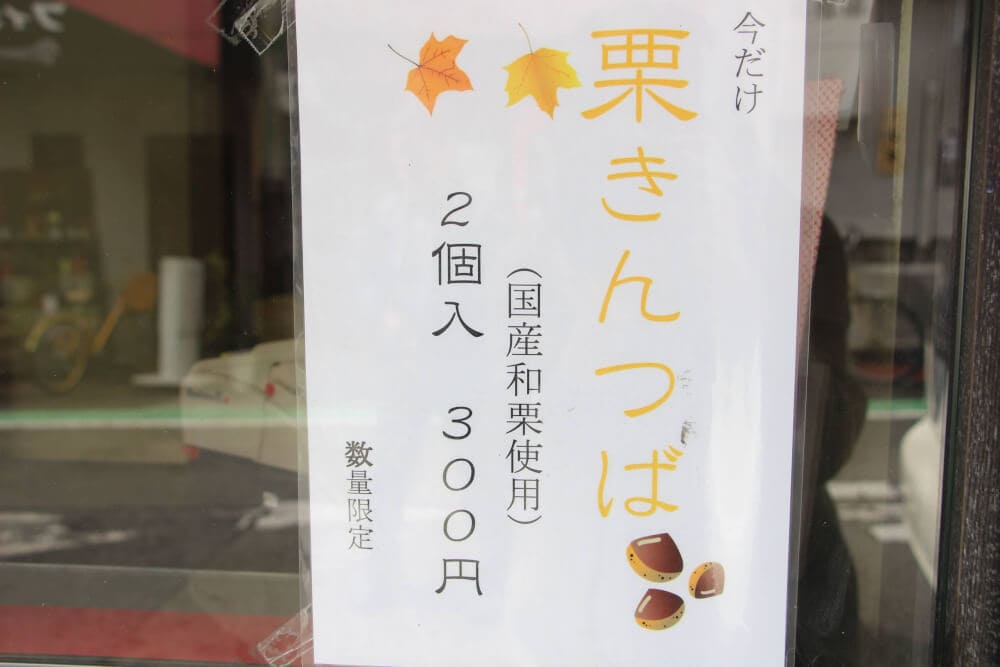
They also sell chestnut kintsuba as a seasonal item. (As of February 2019)
Chestnut kintsuba has been a popular item since it was released in 2018.
*Chestnut kintsuba has now ended, and strawberry kintsuba is currently available as a seasonal item. (Strawberry kintsuba has strawberry juice inside the chunky kintsuba.)
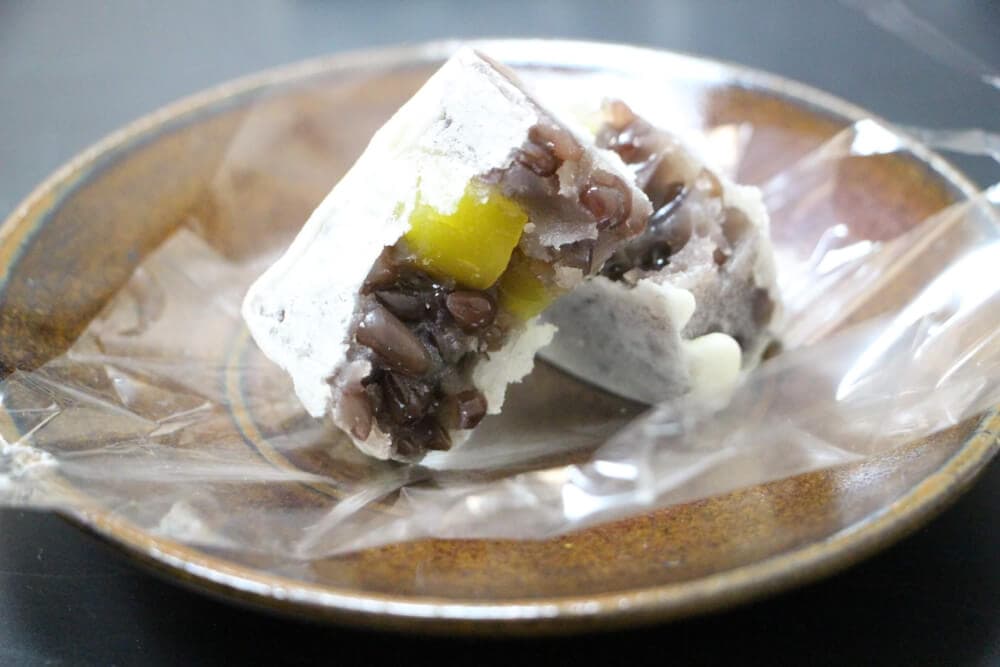
Chestnut kintsuba, 2 pieces ¥300 (tax included)
A hearty kintsuba filled with chunky chestnuts and sweet bean paste.
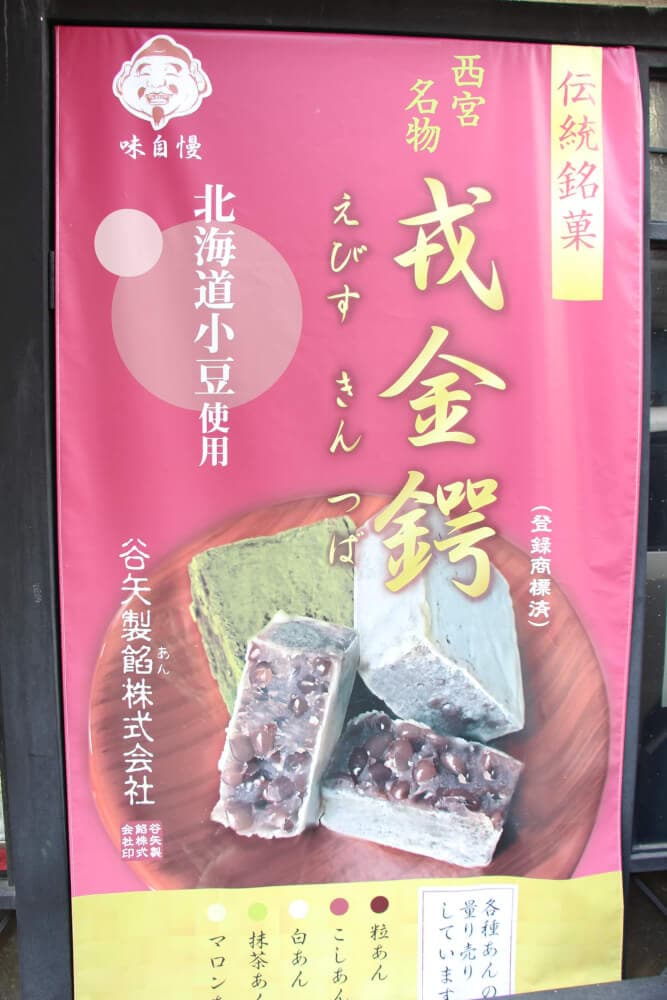
Taniya Seian also sells their carefully made, signature sweet bean paste by weight.
The types of bean paste are…
- Chunky sweet bean paste
- Smooth sweet bean paste
- White bean paste
- Matcha bean paste
- Chestnut bean paste
They sell these five kinds of bean paste by weight♪
And then there’s this “Tookashi”!
Have you heard of Tookashi?
“Tookashi” refers to the wagashi sweets handed out mainly by shops participating in the “Nishinomiya Wagashi Brand Promotion Project Executive Committee”
to people attending the monthly seasonal festival “Toka Mairi,” held on the 10th of every month at Nishinomiya Shrine.
And “Tookashi” are limited-time wagashi sold only on the 10th of each month.
The “Tookashi” handed out at Nishinomiya Shrine changes each month,
but it is also sold at each shop participating in “Tookashi.”
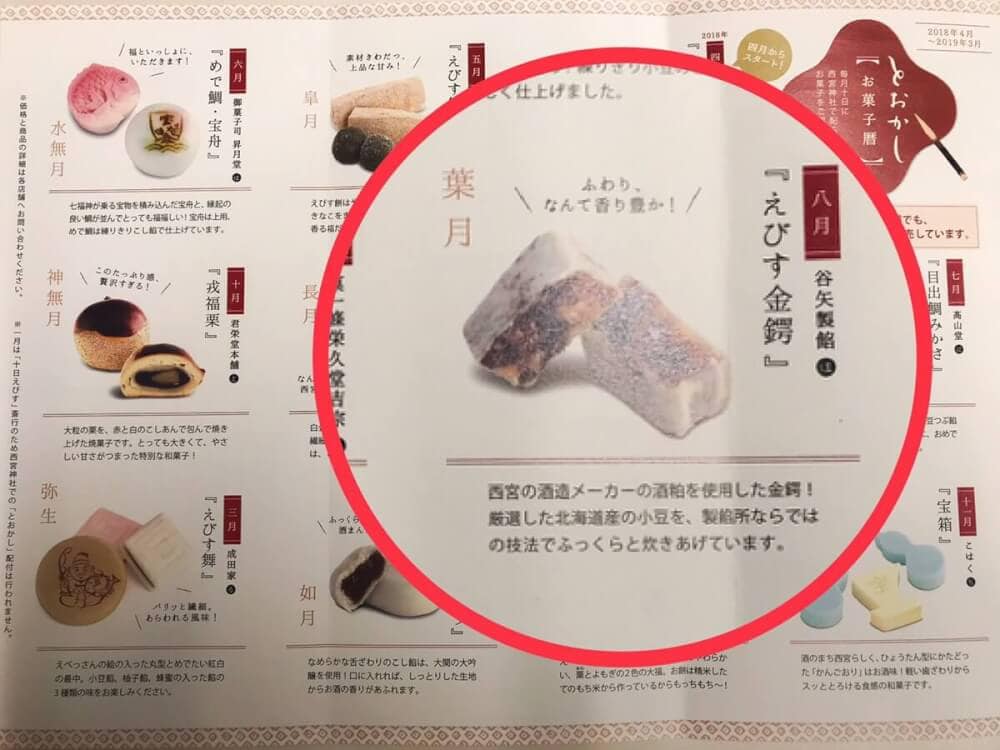
(2018 edition of Tookashi)
And Taniya Seian also takes part in this “Tookashi”!
Their Tookashi-exclusive wagashi is
“Ebisu Kintsuba”, made with sake lees kneaded into the bean paste.
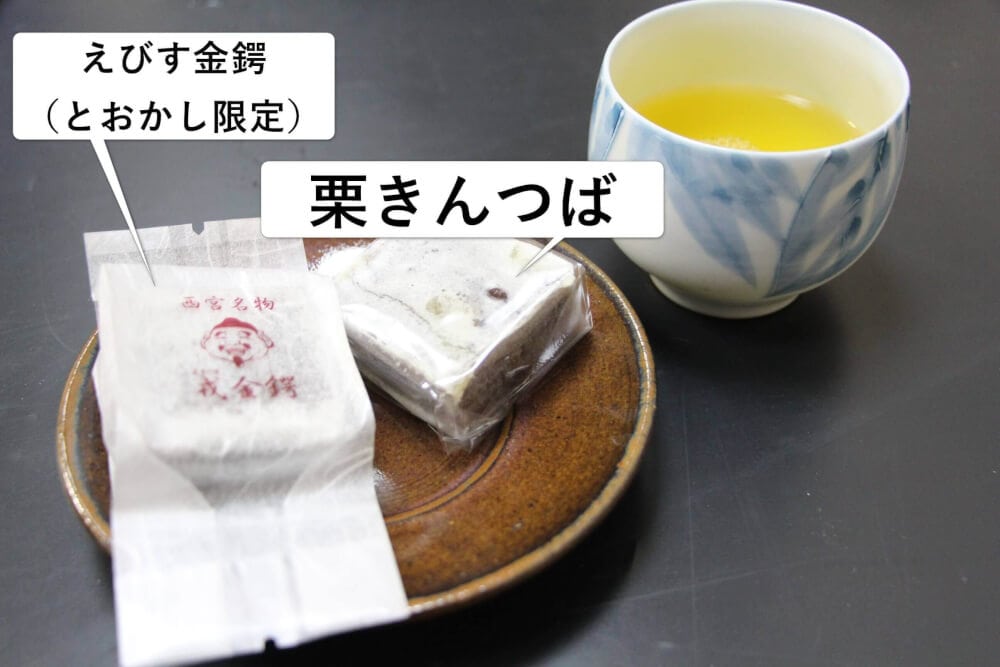
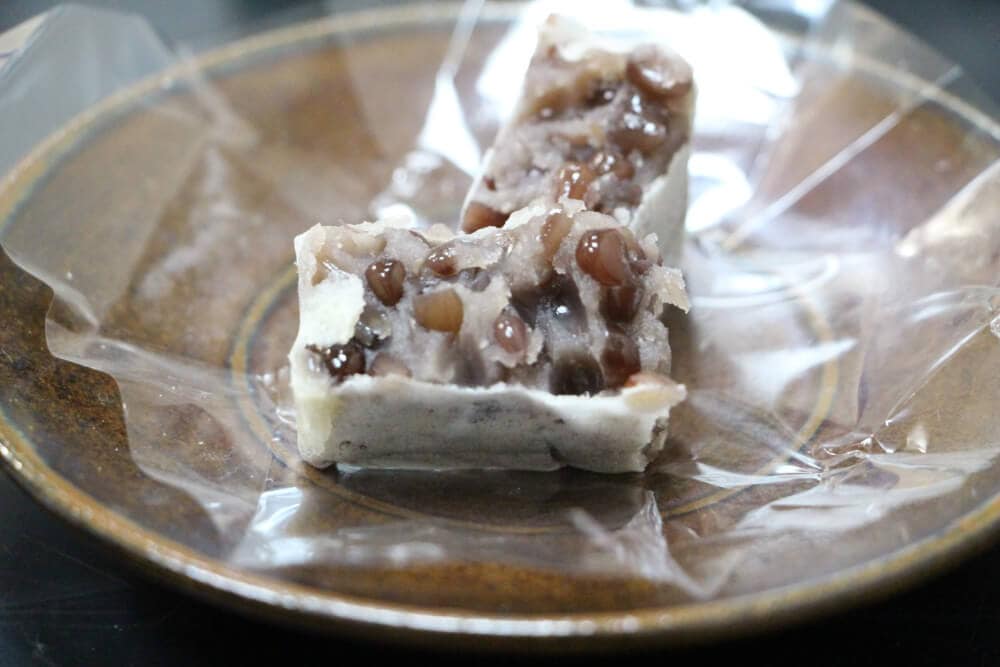
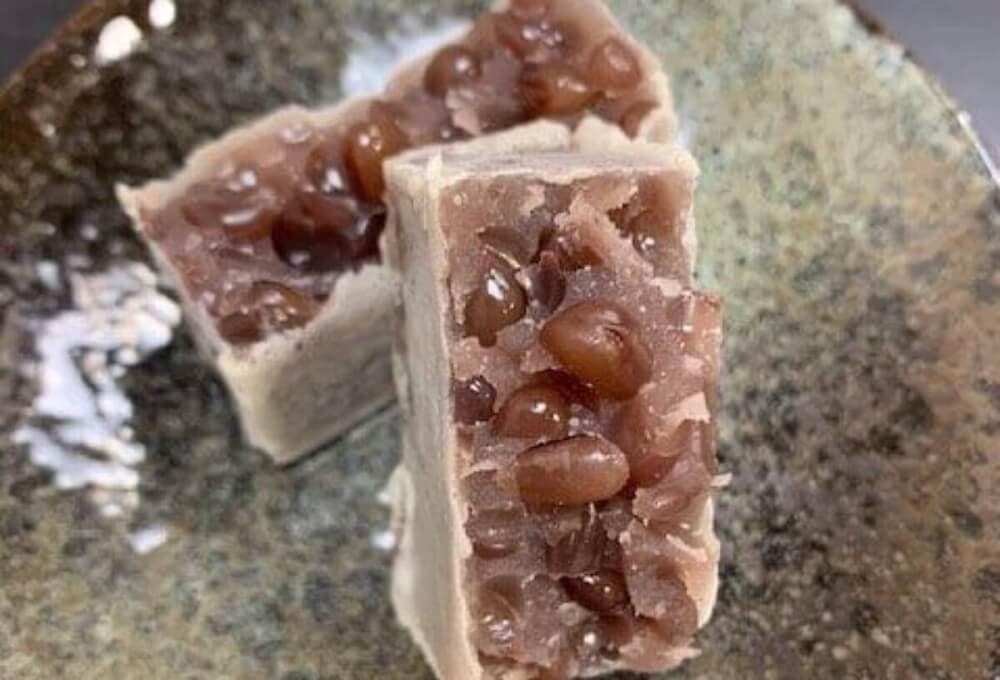
Ebisu Kintsuba has a subtle aroma of sake lees and a not-too-sweet chunky bean paste that pairs beautifully.
The faint white bits inside the bean paste are the sake lees.

Show us the bean paste factory!
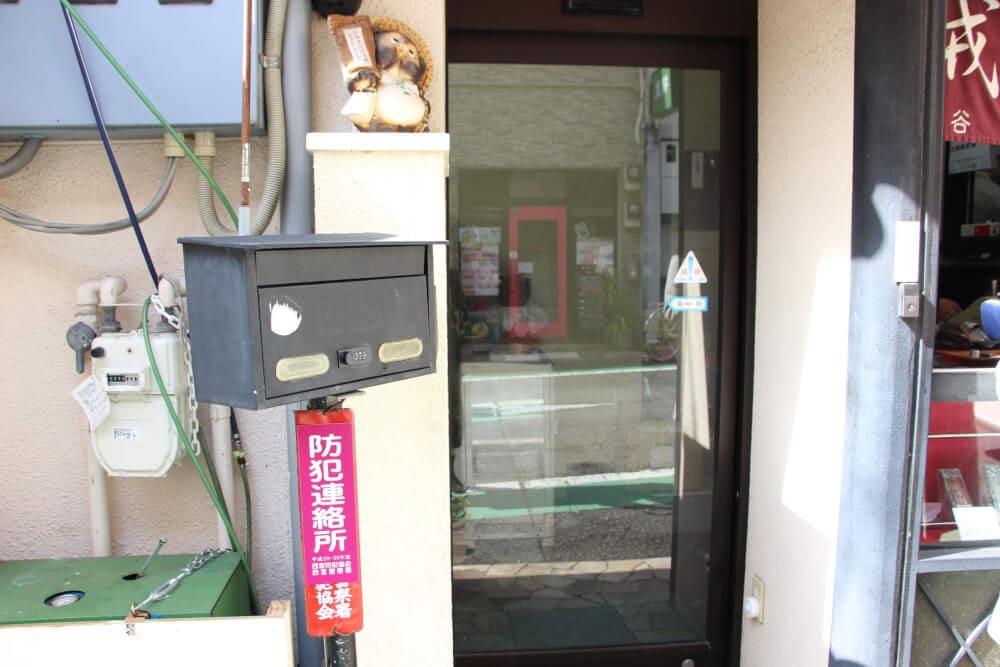
We’re heading in through the automatic door on the left side of the shop!
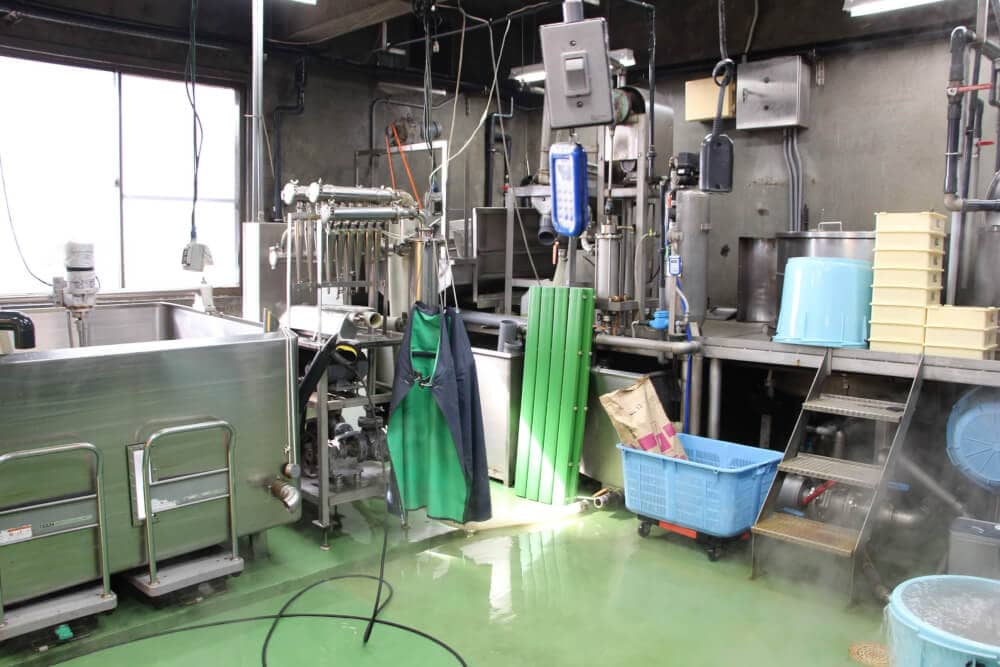
This is the bean paste factory where Taniya Seian’s prized bean paste is made.
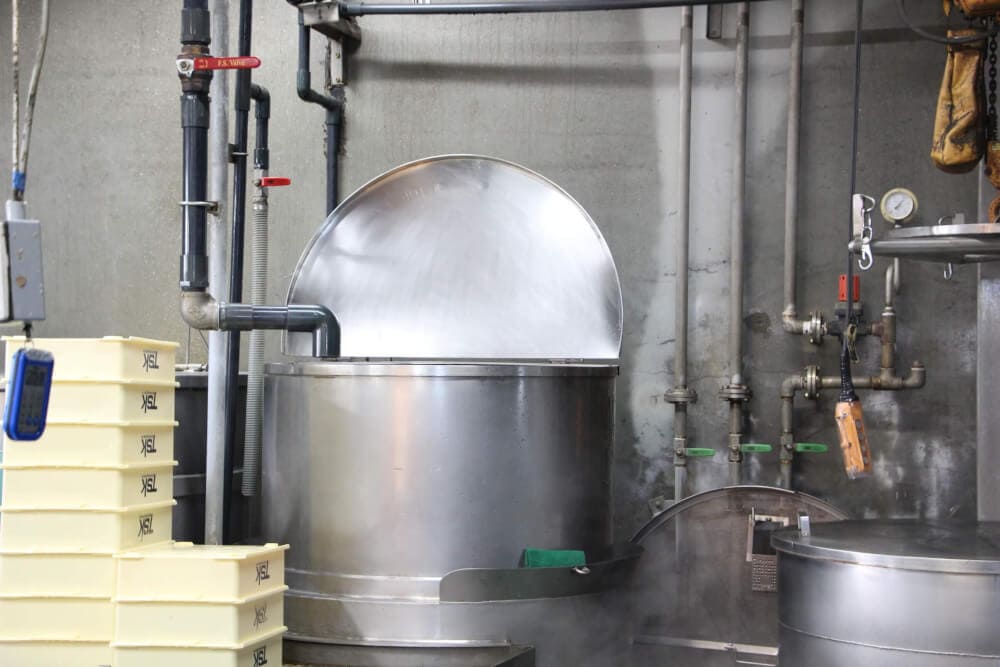
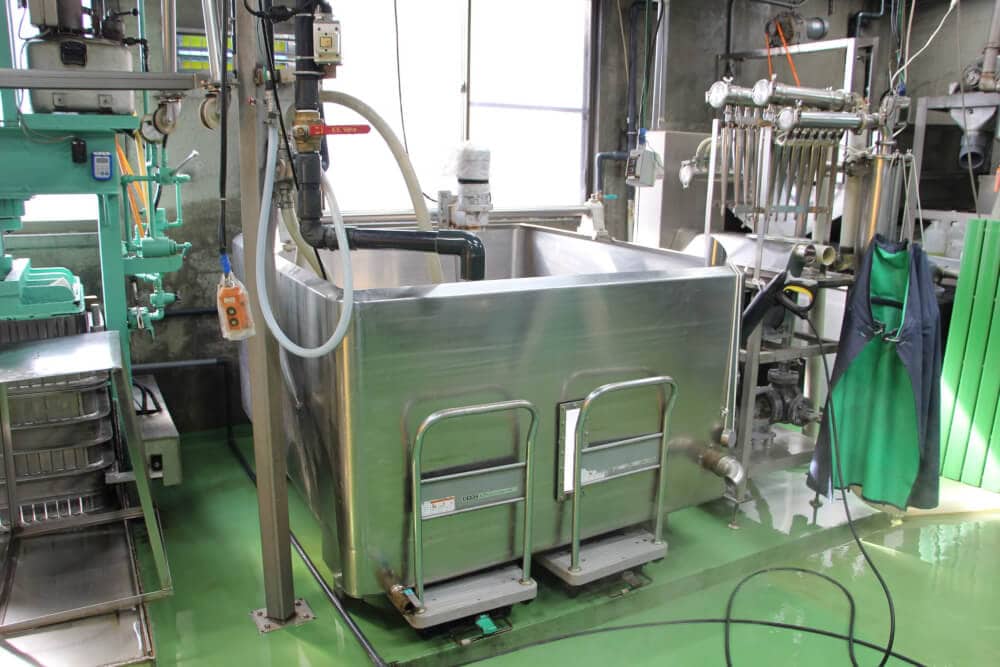
Taniya Seian mainly supplies bean paste to places such as
- wagashi shops
- cake shops
- bakeries
.
So how is smooth bean paste made…?
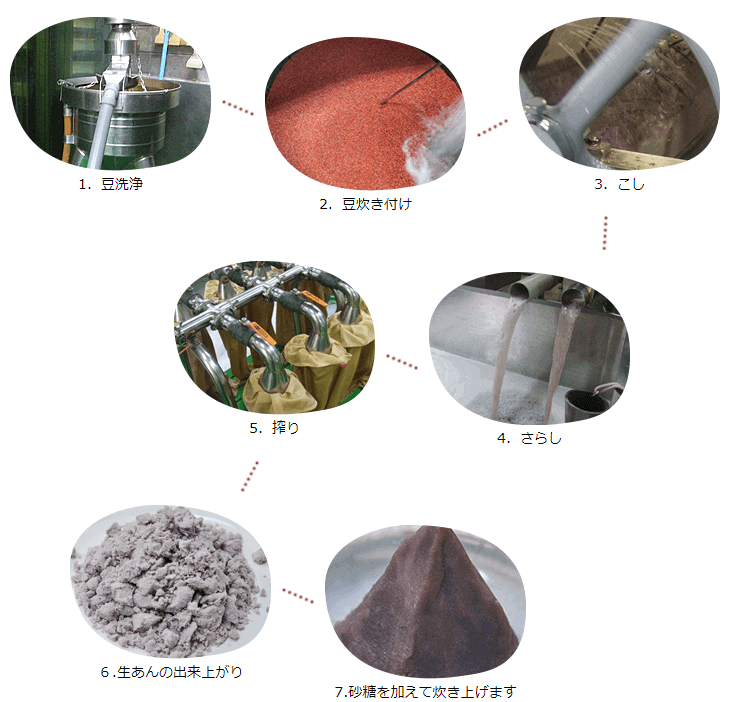
- Bean washing → Carefully wash the adzuki beans
- Cooking the beans → Cook the adzuki beans and perform “shibukiri”
- Straining → Carefully strain the adzuki beans while crushing them
- Squeezing → Put the strained adzuki beans into a cloth bag and squeeze firmly
- Rinsing → Remove the moisture
- Raw bean paste is complete
- Add sugar and cook it down (smooth bean paste) → Add sugar and water, heat while removing scum, and knead thoroughly until the smooth bean paste is complete
The most important part of this process is controlling the heat and the amount of water.
Taniya Seian is especially meticulous about the heat and water levels during step ② of making smooth bean paste, “shibukiri.”
It is the process of removing the bitter components contained in adzuki beans.
The beans are boiled from cold water, brought to a boil, and then the cooking water is discarded.
Doing this several times removes bitterness and scum. This process is called shibukiri.
The adzuki beans are shining, aren’t they?
President Tatsuma, the fourth-generation president, said that getting them to shine like this is the hardest part.
They’re also particular about the adzuki beans themselves!
They use carefully selected adzuki beans from Hokkaido.
but it really made me appreciate how this bean paste has been carefully preserved over the years!
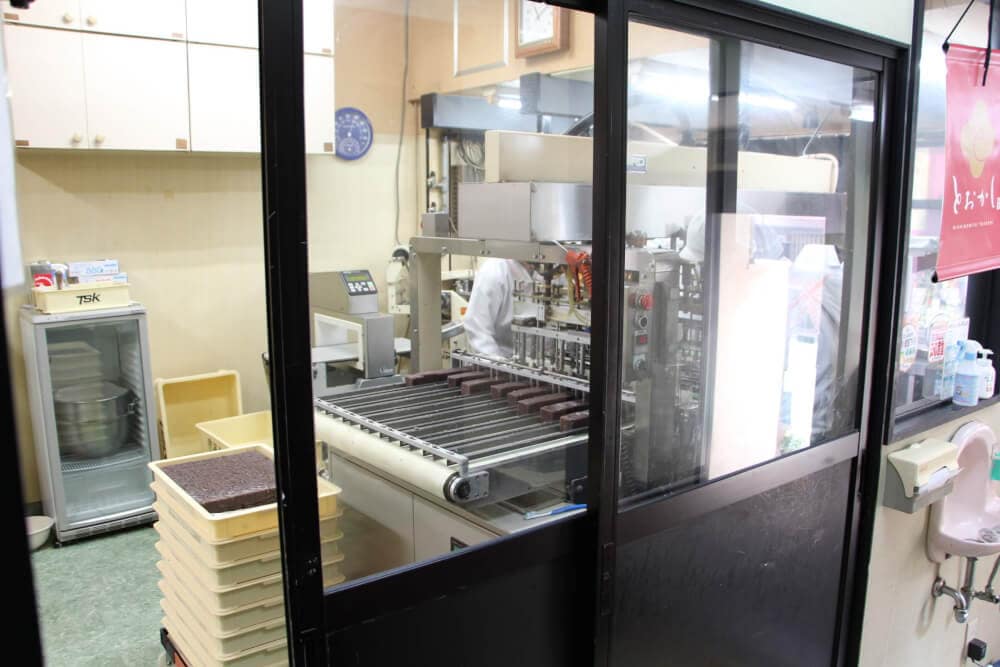
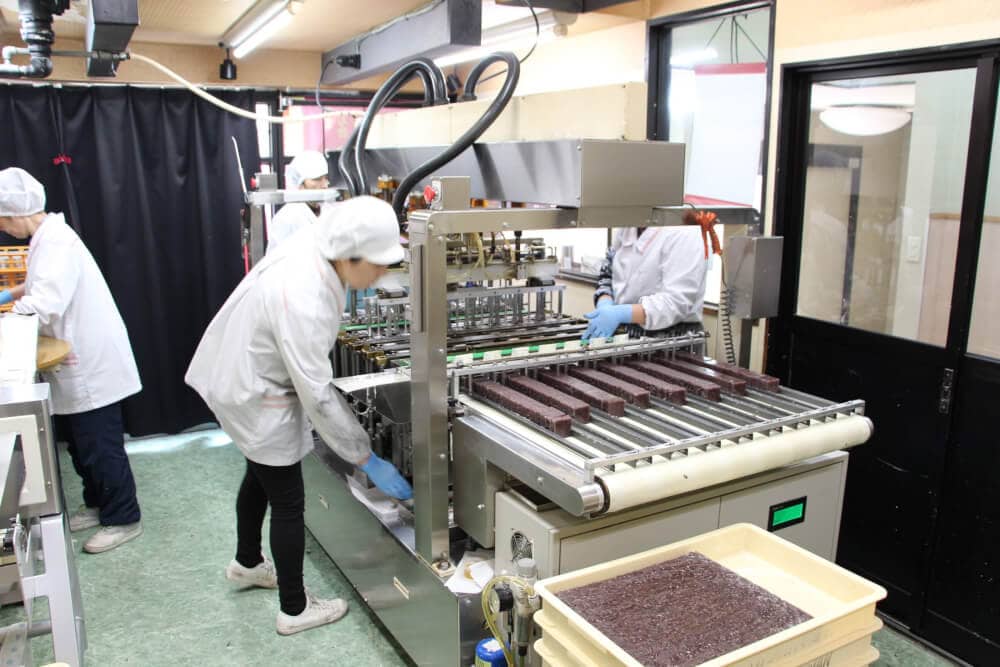
This room is the workspace where Ebisu Kintsuba is made.






After trying the Ebisu Kintsuba with sake lees,
Miyatama thought this kintsuba would also make a great snack with drinks.