



I saw a post on Twitter saying “There are tons of fish in Higashigawa”, so I went to check out Higashigawa!
阪神西宮駅近くの東川、めちゃめちゃ魚いる pic.twitter.com/Yyx4wDiUb2
— サイカ (@31karomem) March 10, 2021
This article is brought to you by “GenkiStyle,” a foot treatment clinic that supports Nishitsu.
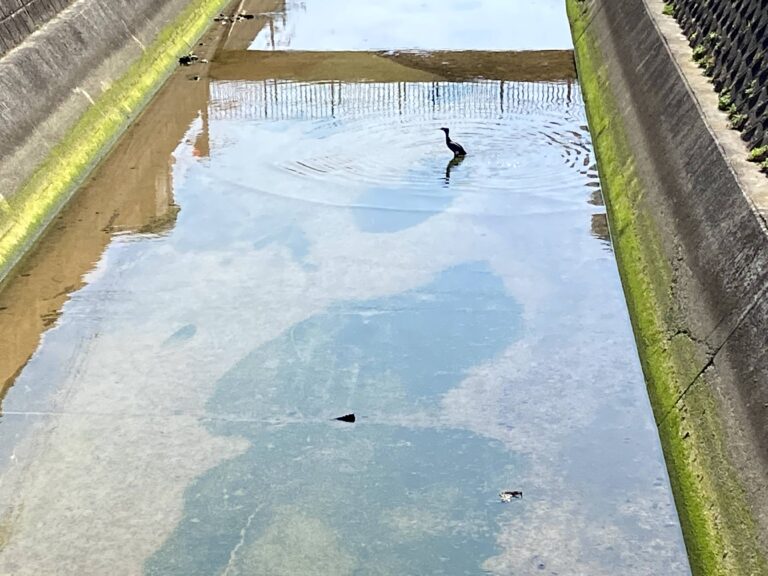
This is “Higashigawa.”
But there weren’t any fish at all… Even the bird was just trudging along…
I couldn’t give up, so I headed over to the nearby “Rokutanji River”…
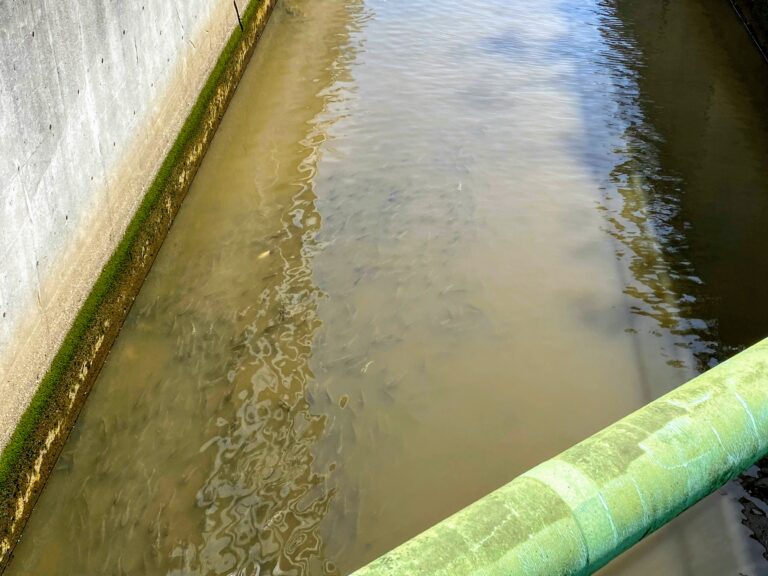
There they were!!! So many of them!!
This is around Route 43, where “Rokutanji River” and “Higashigawa” meet.
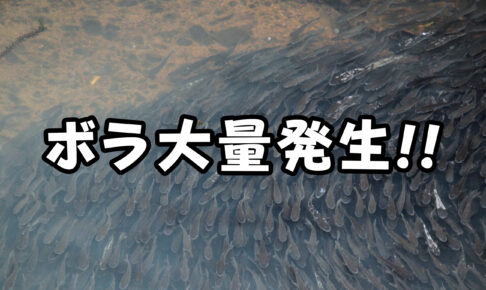
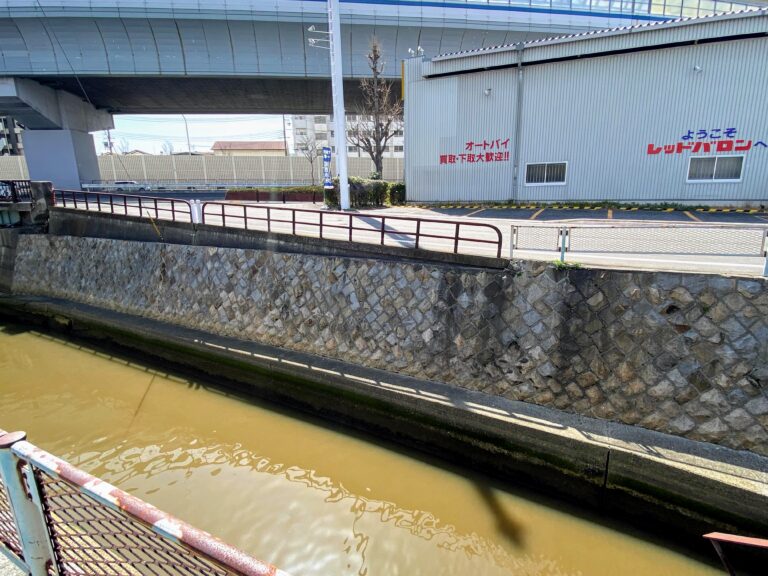
Around here.
Then I followed the river all the way toward Hanshin Nishinomiya,
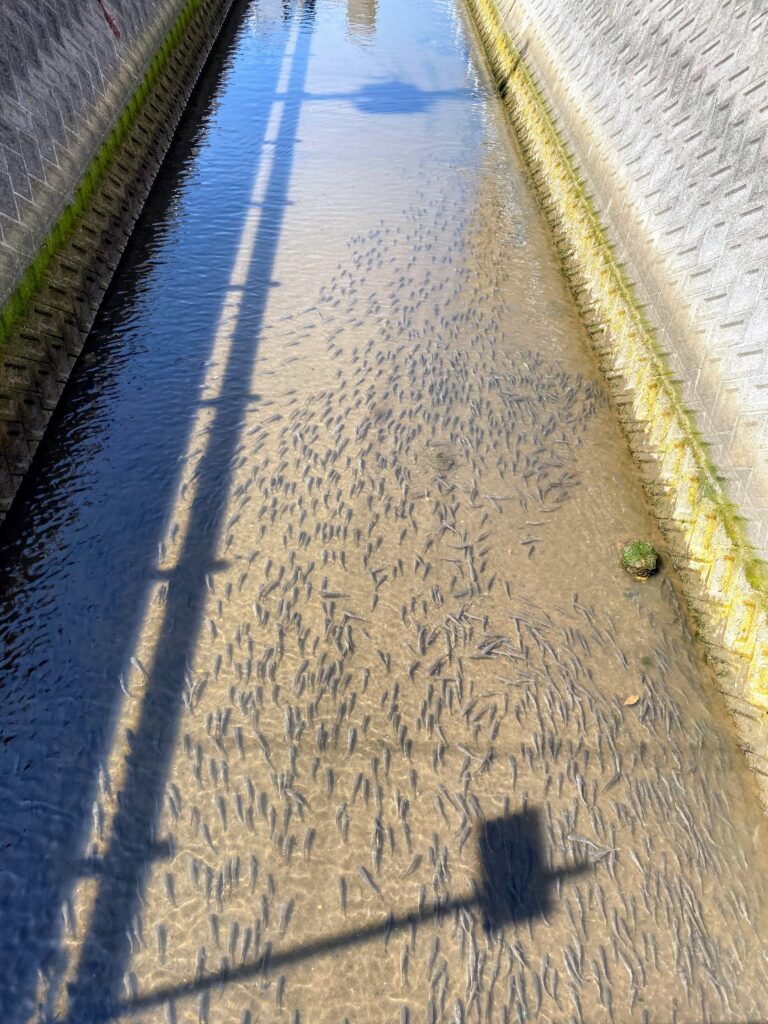
and sure enough,
there were sooo many of them!!!
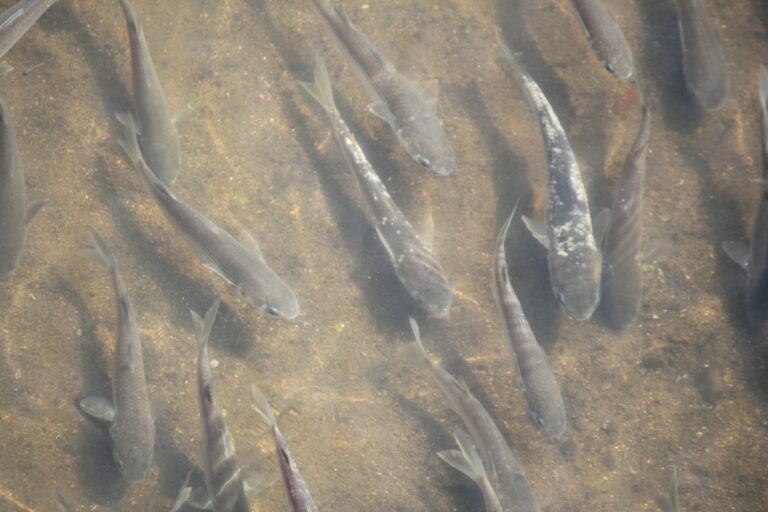
Could these be the same mullet that were in Tsumongawa in huge numbers??
Since mullet are fish that change names as they grow, these are probably young mullet called oboko, subashiri, or ina (up to 25 cm) 😊
According to the Environmental Learning Support Center, the white spots on their backs are “likely water mold disease.”
It often seems to happen due to sudden changes in water temperature or changes and deterioration in water quality. (With cooperation from the person behind the Hama/Kawa/Yama Nature Exploration Team Twitter)
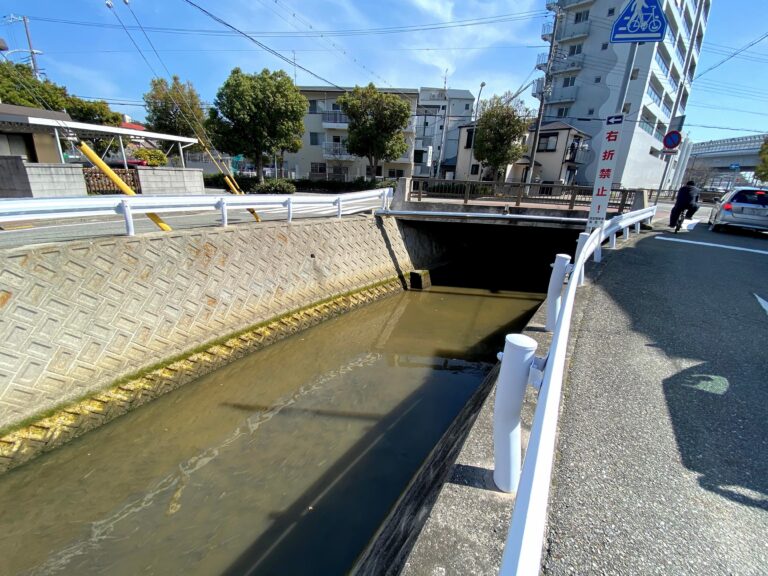
It’s around here.
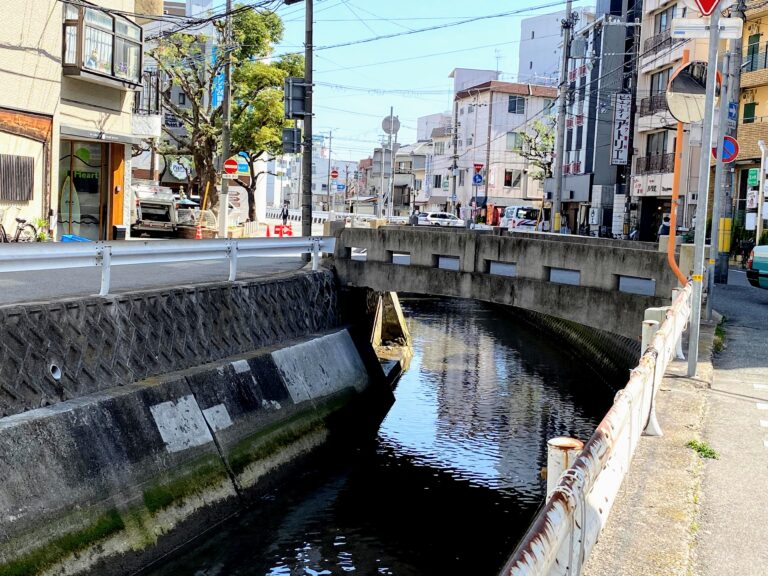
The mullet were swimming back and forth as far as this area near the Hanshin Railway tracks.
It looks like they might be gathering in warm sunny spots??
While I was watching the mullet relaxing in the sun, something strange happened!!
What was that😳!?!?
They suddenly made a wave, startled by something!
Come to think of it, what do fish react to🤔??
I tried a little experiment!
Apparently, it was the shadow! (They can also hear sound, apparently.)
I didn’t know they would react to shadows too!
(*Please don’t chase them too much, as it can weaken the fish🙏)
The map is around here↓
It’s around the stretch of Rokutanji River between the Hanshin Railway overpass and Route 43.
The mullet info on Twitter said “Higashigawa,” so it seems like they move back and forth depending on the day!
Were the water birds in Tsumongawa “Eurasian coots”?
In the recent article about the mullet in Tsumongawa, I wrote that the birds ignoring the mullet were “cormorants,”
but we received a tip saying they might actually be water birds called “Eurasian coots”!
(Information provided by 666. Thank you!)
I asked the person behind the Hama/Kawa/Yama Nature Exploration Team Twitter, who knows a lot about nature and takes part in the Omaehama Cleanup, and they said they were Eurasian coots. (They also asked about the white spots on the mullet.)
Apparently Eurasian coots have been increasing in recent years, and this year there seem to be especially many.

*Screenshot from BIRD FAN | Wild Bird Society of Japan website


So cormorants’ necks turn white when they become adults!
Finally
The “Rokutanji River”, where there were huge numbers of mullet this time, connects near the river mouth with the “Tsumongawa” from the other day.
Maybe they came in from the sea together, then split off along the way into different rivers!
Where will the mullet go after this? Back to the sea🤔??
Apparently they eventually grow to about 80 cm, so if they stayed in the river the whole time, that would be quite a situation… 😅
666, and the person behind the Hama/Kawa/Yama Nature Exploration Team Twitter, thank you for the information about the Eurasian coots!!
■■■We’re looking for tips!■■■