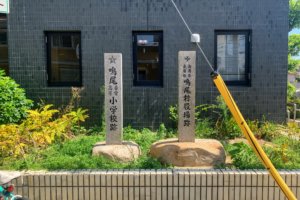


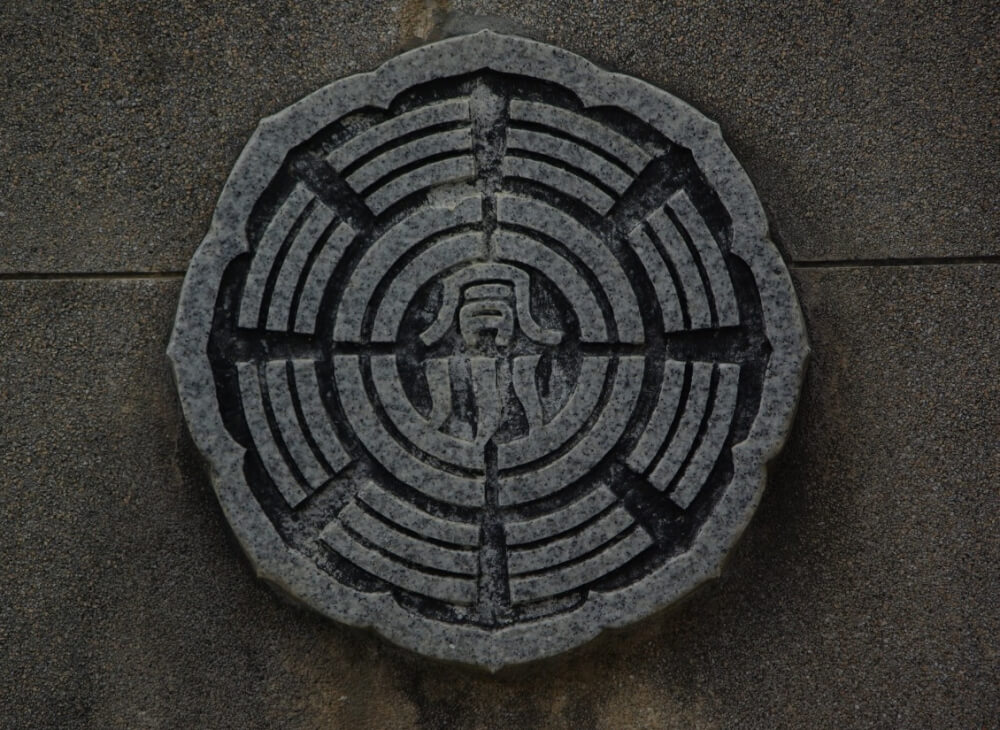

Recently, I’ve mainly been writing about topics from my hometown of Shukugawa, but this time I’d like to write about the school song of Shukugawa Elementary School.
First, take a look at the lyrics.
目次
Shukugawa Elementary School Song
One,
The Muko mountain range, the Muko sea
Nishinomiya, blessed with splendid sea and mountains
Here we train ourselves
Taking that beauty into our hearts
Let us grow strong and righteous
Two,
Since the ancient days of the god Hiruko
Nishinomiya has a long history
Here we strive and study
Inheriting that tradition
Let us take one step further ahead
Oh, our homeland, beloved children of our homeland
Music: Koji Nagai
Lyrics: Kyukin Susukida
Here it is. Do you understand what it means?
When I was in elementary school, I just sang it without really understanding the meaning.
After becoming an adult, I somehow came to understand it, but even for adults, these lyrics are pretty difficult.
The lyricist, Kyukin Susukida, was a famous poet active before the war who had a major influence on figures such as Akiko Yosano.
Apparently, he lived in Nishinomiya for a time, and during that period he wrote the lyrics for Shukugawa Elementary School’s song.
The composer, Koji Nagai, was a music educator who founded what is now Osaka College of Music, so this school song was actually created by an amazing duo.
In Nishinomiya, the school song of Yasui Elementary School was also created by this same duo, though its lyrics are not quite as difficult as this one’s (though I still think they are hard).
In fact, these lyrics include several important points when talking about Nishinomiya, so I’d like to unpack them a little.
The Muko Mountain Range and the Muko Sea
The “Muko mountain range” that appears in these lyrics refers to what is now “Mount Rokko.”
The area around present-day Nishinomiya was originally a region called “Muko.”
There are various theories about why it came to be called “Muko,” and nothing is known for certain, but the leading theories are that it was “over there” across Osaka Bay from the Yamato region, or that Empress Jingu buried weapons there after her expedition to the Three Kingdoms of Korea.
Various characters were applied to the place name “Muko,” including “武庫,” “務古,” “牟古,” “六兒,” and “無古,” and one of them was “六甲.”
So “Mukoyama” became “武庫山” and “六甲山,” eventually leading to the modern reading “Rokkosan” for Mount Rokko.
And needless to say, the “Muko sea” refers to the sea around present-day Osaka Bay.
Names such as “Chinu no Umi,” “Chinu no Ura,” and “Chinu no Urawa” also refer to the same sea.
In school songs from the Hanshin area, you often see phrases like “Muko River,” “Muko Sea,” “Muko Plain,” “Chinu no Umi,” “Chinu no Ura,” “Mount Rokko,” and “Rokko Peaks.” Sometimes you may also find lyrics that mention “Muko Mountain,” or write “六甲の山” and read it as “Muko no Yama.”
How about your school’s song?
The God Hiruko
Hiruko is the name of a god who appears in the “birth of the land” stories in the Kojiki and Nihon Shoki.
The “birth of the land” is the story of Izanagi and Izanami giving birth to the various islands of Japan, and it is said that the very first being born was this “Hiruko.”
However, Hiruko and the next-born “Awashima” were born imperfect, so they are not counted as children of Izanagi and Izanami.
Hiruko was then placed in a boat immediately after birth and set adrift at sea.
It is said that Hiruko drifted ashore in the sea around present-day Nishinomiya, and that enshrining him there was the origin of Nishinomiya Shrine (though legends of Hiruko washing ashore exist in many places across Japan).
The characters “蛭子” can also be read as “Ebisu,” so while there is a theory that “Ebessan” and Hiruko are the same deity, there is also a theory that they are not. The truth is not clear.
In any case, if you read the lyrics “Since the ancient days of the god Hiruko, Nishinomiya has a long history” as they are, they could even be taken to mean that Nishinomiya’s history is longer than the history of Japan itself (though I do think that is going a bit too far), so the scale of these lyrics really is grand.
And since the song says, “Inheriting that tradition, let us take one step further ahead,” it is basically encouraging the ultimate form of “learning from the past to create something new.”
In Closing
I think this school song carries a wish for children raised not only in Shukugawa, but in Nishinomiya as a town blessed with rich nature, history, and tradition, to open up the future for themselves.
We sang school songs as children without really understanding what they meant, but looking back on them as adults might bring some new discoveries.