



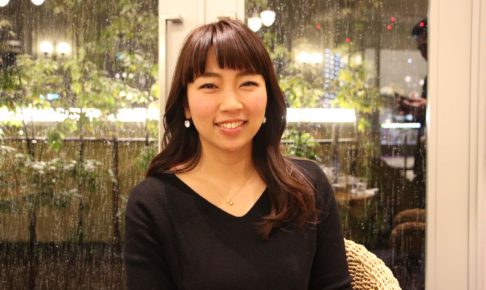
This is an introduction from Masami Nakatsu, who was featured in Miya-gao No.7♪
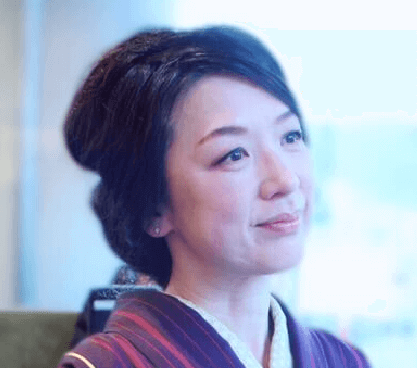
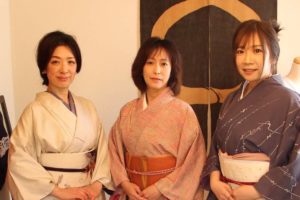
Miya-gao No.12 features Ms. Miyuki Ishii!
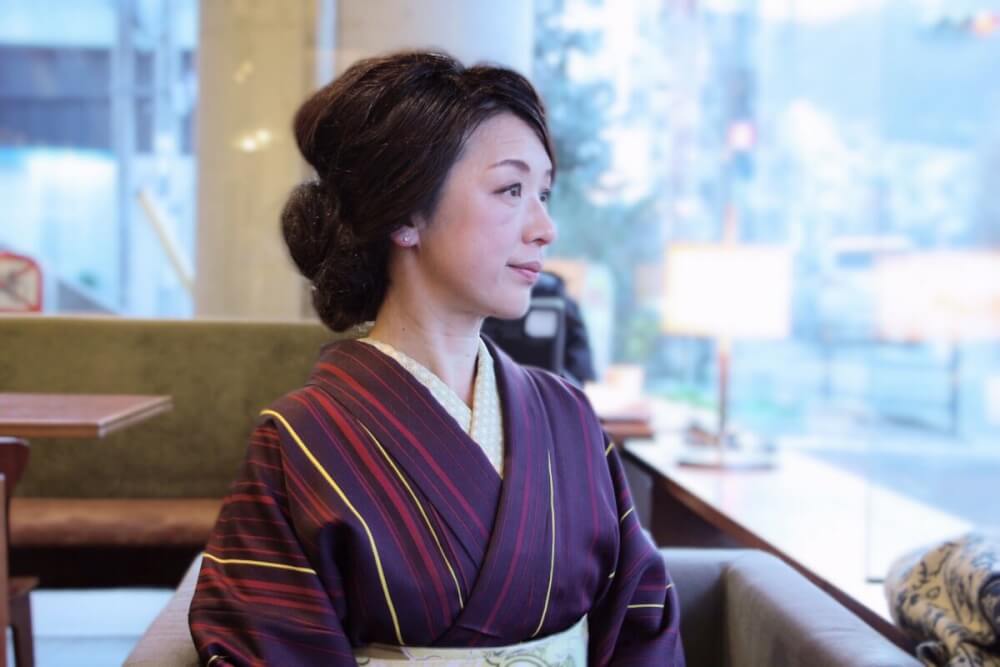

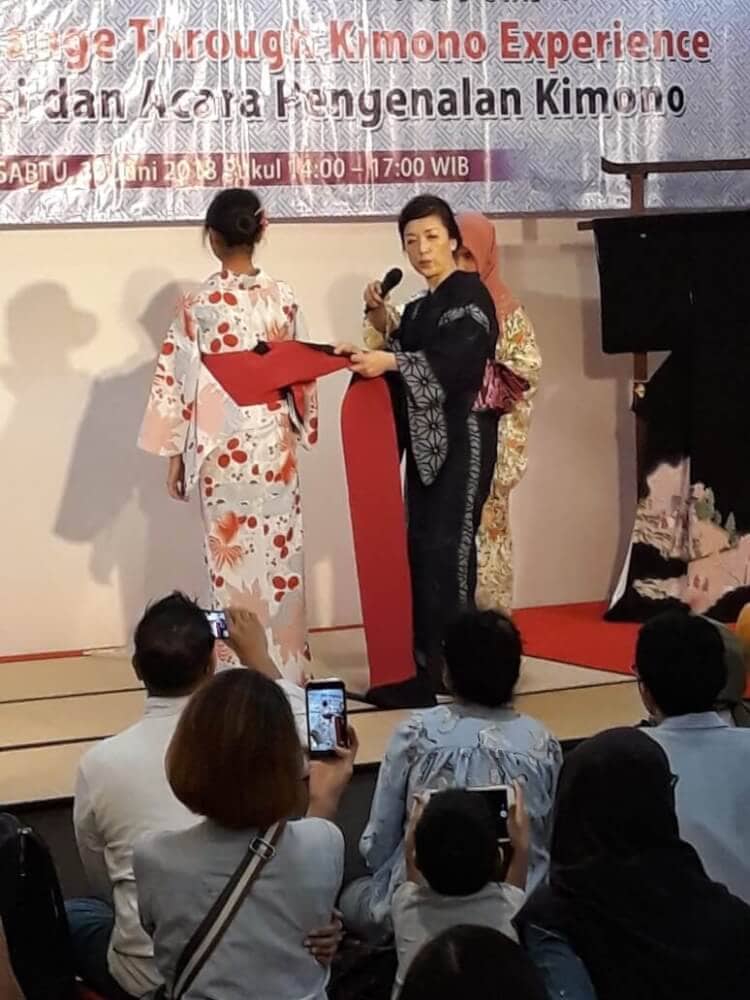
Ms. Ishii teaches kimono dressing classes at a school in Kyoto, as well as in Nishinomiya-Kitaguchi and Koyoen♪
Let’s jump right into the questions!

I bet you know all kinds of sides of Nishinomiya!
So, what are your favorite places in Nishinomiya?
Omaehama, where the sunset is beautiful.
And near my home, the Kitayama Botanical Garden and the Kitayama Park hiking trail.
Then, what shops or restaurants do you recommend in Nishinomiya?
Ueshima Coffee Main Store in Kurakuen.
It has sofas, and it’s a relaxing place where you can really unwind.
(We interviewed Ms. Ishii at Ueshima Coffee Main Store in Kurakuen.)
Please give us a message for Nishinomiya!
But I realized they are a little different.
The rhythm you feel here is different, there’s a lot of nature, and it has a calm atmosphere.
So, Ms. Ishii, what spots in Nishinomiya do you often visit with your daughter?
Kitayama Botanical Garden and the nearby Kitayama Park hiking trail.
We often go to the Kitayama Botanical Garden and hiking trail to help my daughter get more exercise.
Finally, Ms. Ishii, what kind of person are you?
I actually look at things pretty objectively.
I often observe both the people around me and myself from an objective point of view.
And if I had to sum myself up in one phrase, I’d say I’m flexible but stubborn.
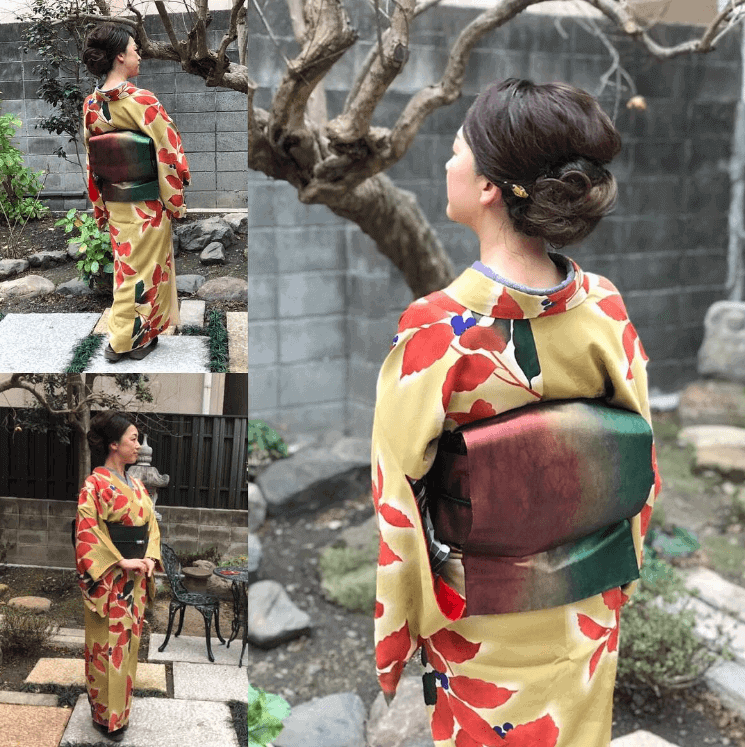
She looks absolutely wonderful in kimono, a real Yamato Nadeshiko!
She runs two classes for Kyoto Kimono Gakuin Kyoto Main School, one in Nishinomiya and one in Koyoen,
and she also teaches students as an instructor at a school in Kyoto.
In addition,
the NPO Waso Kyoiku Kokumin Suishin Kaigi is promoting the introduction of kimono education into home economics classes at junior high schools nationwide,
and Ms. Ishii is active as a member working toward introducing it in Hyogo Prefecture.
Unfortunately, however, Hyogo Prefecture has fallen behind and has not introduced kimono education into classes.
Ms. Ishii is involved in various efforts with the wish that
“many children will learn to put on a yukata by themselves, and that they will have opportunities to experience wafuku, Japanese traditional clothing.”
For example, she holds kimono dressing classes for teachers at schools in Kobe
and teaches them about the appeal of kimono.
Interest in kimono culture is growing overseas,
but in Japan, interest seems weaker, or perhaps because it’s something that has always been around, we tend to overlook it…
In fact, I, Miyatama, can’t put on a kimono by myself…
Even though I’m Japanese. It’s embarrassing…
Why is that?
She said, “I’d be happy if seeing me in kimono could be even a small opportunity for someone to become interested in kimono.”
For example, someone might think about taking out a kimono that has been put away for a long time, or choosing to go out in kimono instead of regular clothes.
After interviewing Ms. Ishii about kimono manners and kimono culture, I once again felt that we must not lose Japan’s traditional culture.
“People cannot grow without culture.”
She treasures these words from her teacher, and they gave me a lot to think about.
Ms. Ishii, thank you so much for answering our questions!
but overseas as well!
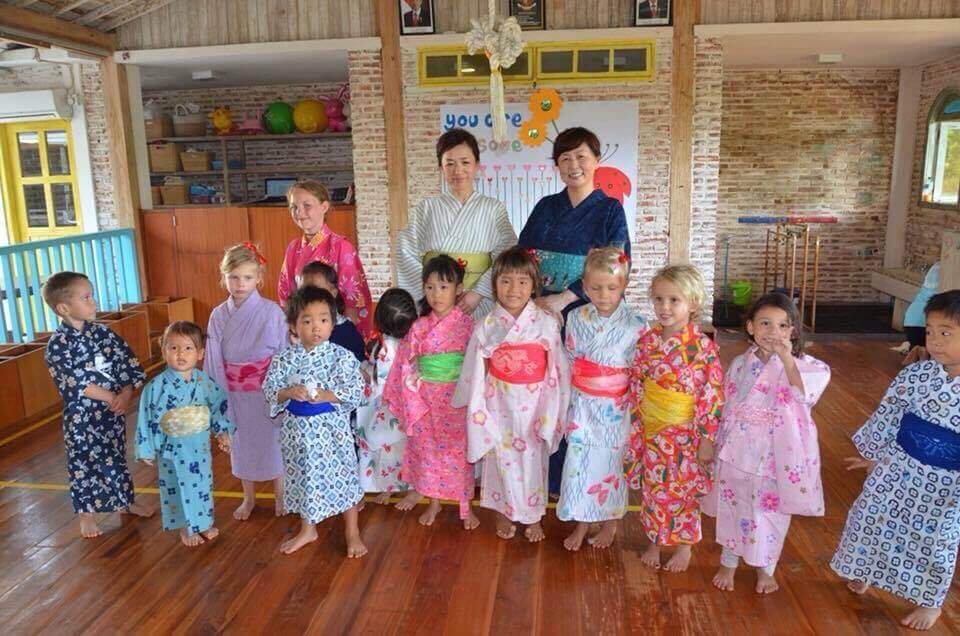
At Shikibali Nursery School in Bali
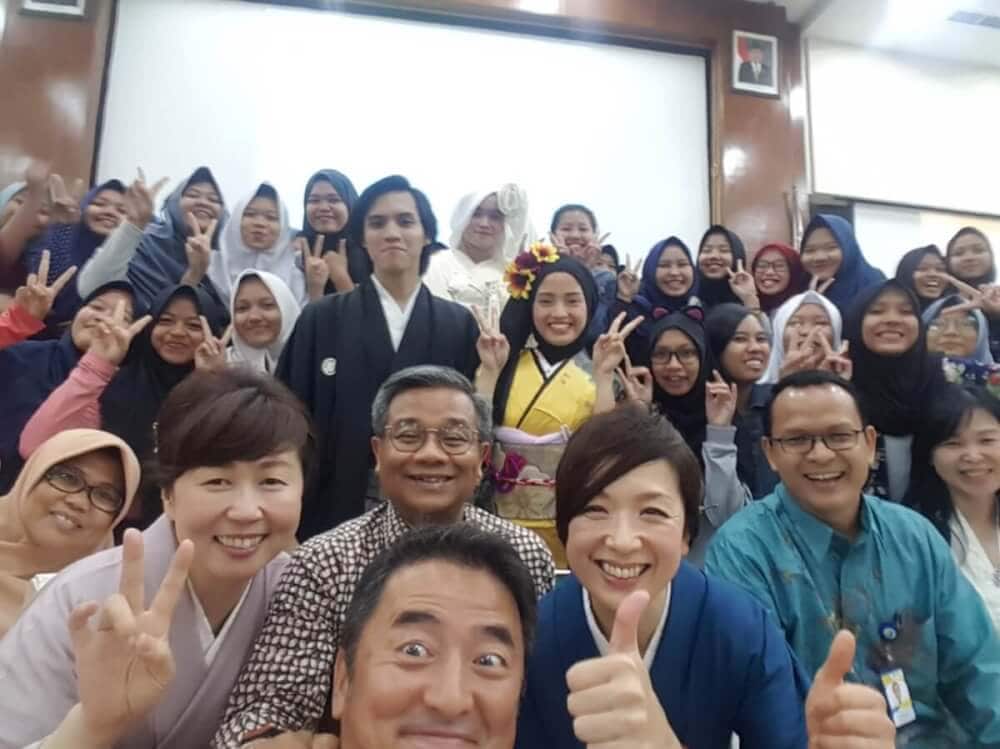

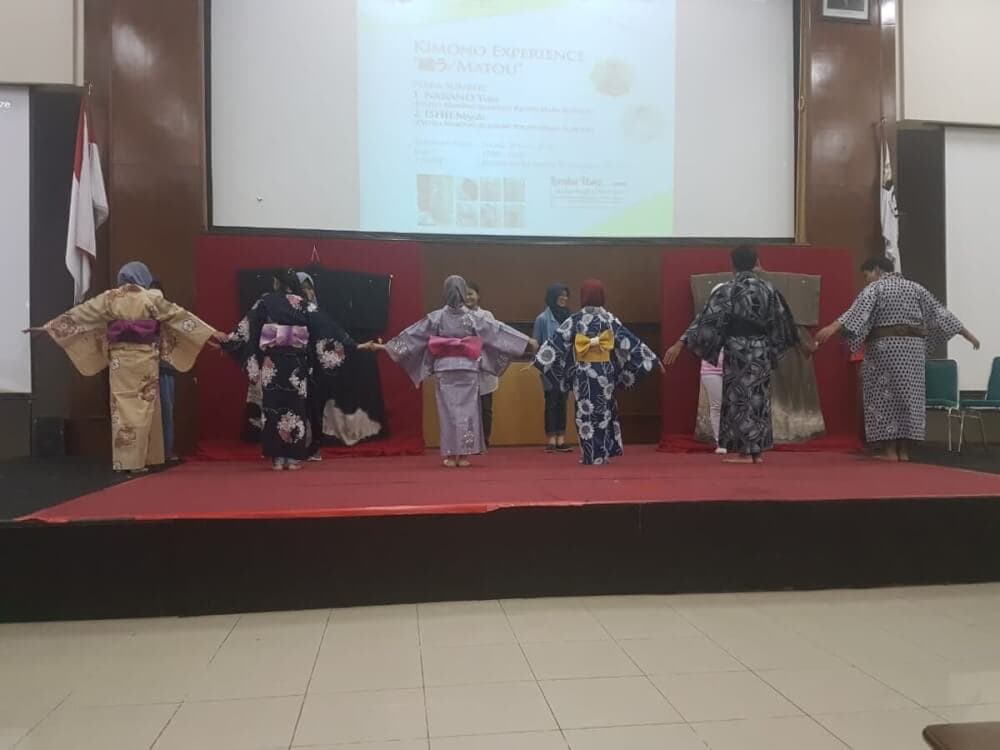
Kimono event “Matou” at Al Azhar University in Jakarta
Local people have a strong interest in Japanese culture,
and Japanese residents are apparently often asked, “How do you put on a kimono?”
But those Japanese residents weren’t able to teach kimono dressing,
and since a friend of Ms. Ishii’s was in Jakarta, the overseas kimono dressing class came to life!

Kimono experience event “Matou” at the Japan Foundation Jakarta Office
You can see what the kimono experience event was like here▼
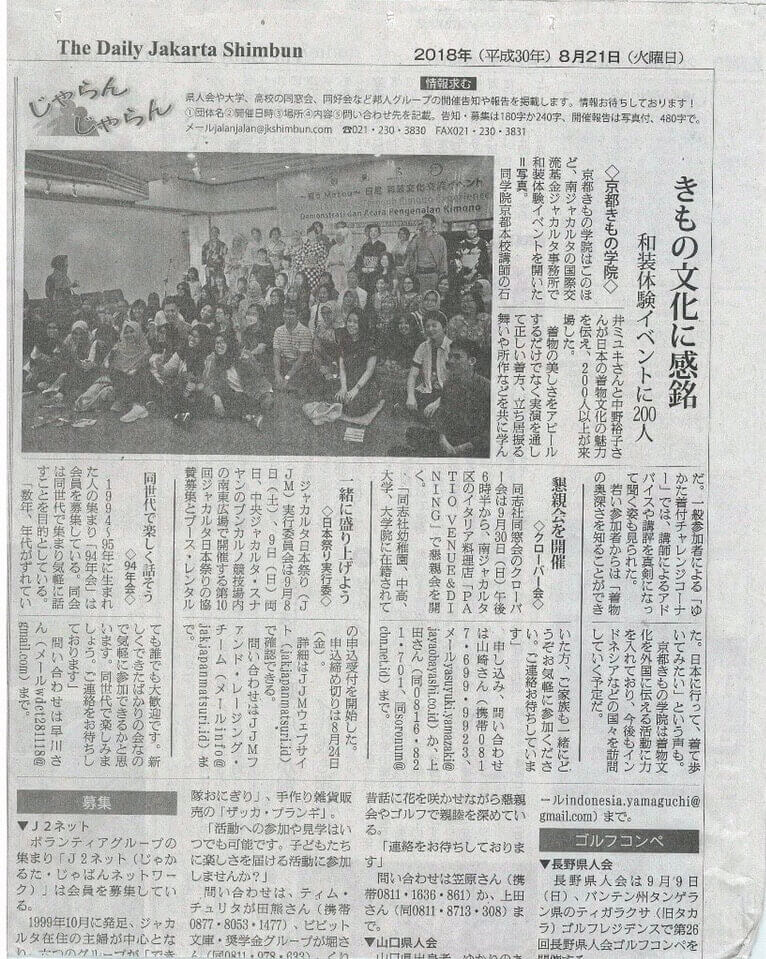
And the event held at the Japan Foundation in Jakarta
was featured in newspapers and local news!
Kimono is even more popular overseas than it is in Japan!
Finally, here is a message from Ms. Ishii!
Some people have a painful experience at their Coming of Age Ceremony, so they don’t want to wear kimono anymore.
Of course it’s nice to look beautiful,
but some people can’t eat, can’t go to the restroom, can’t even drink water, and that makes them stop wearing kimono. That makes me sad.
In my kimono dressing classes, I focus above all on teaching people how to wear kimono without discomfort.
I want them to look beautiful and feel refreshed while wearing kimono.
I don’t want to create even one person who comes to dislike kimono.

Ms. Ishii, thank you so much!
Ms. Miyuki Ishii’s Facebook is here.
Her Instagram is here.
Look forward to the next Miya-gao No.13☆




Here’s the first question…
What is your connection to Nishinomiya?