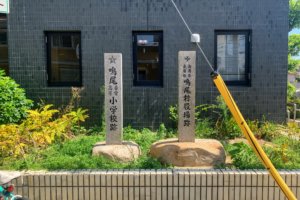


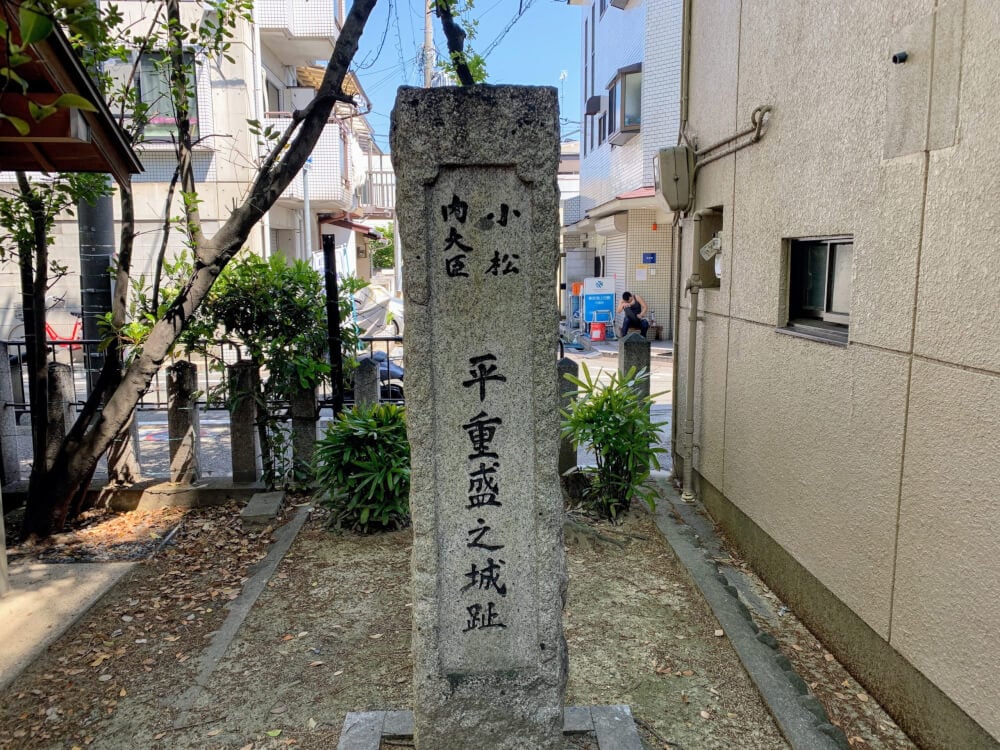

On the grounds of Okata Shrine, said to be the oldest shrine in the Naruo area, there is a stone monument marking the “Site of Taira no Shigemori’s Castle (Komatsu Castle Site).”
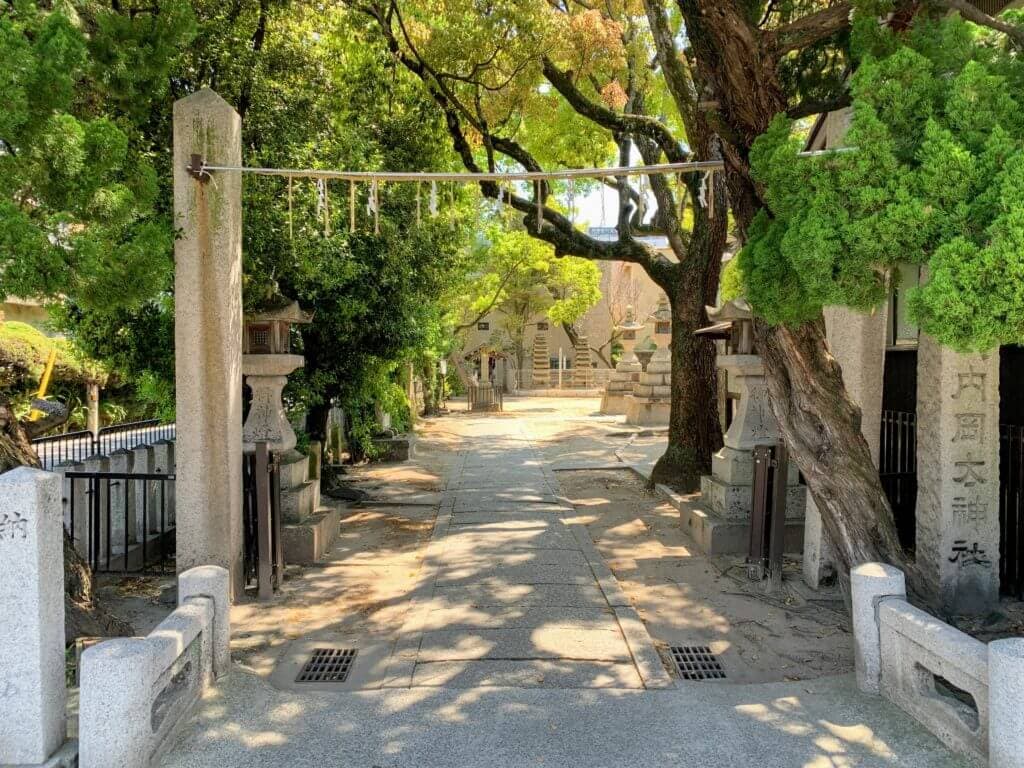
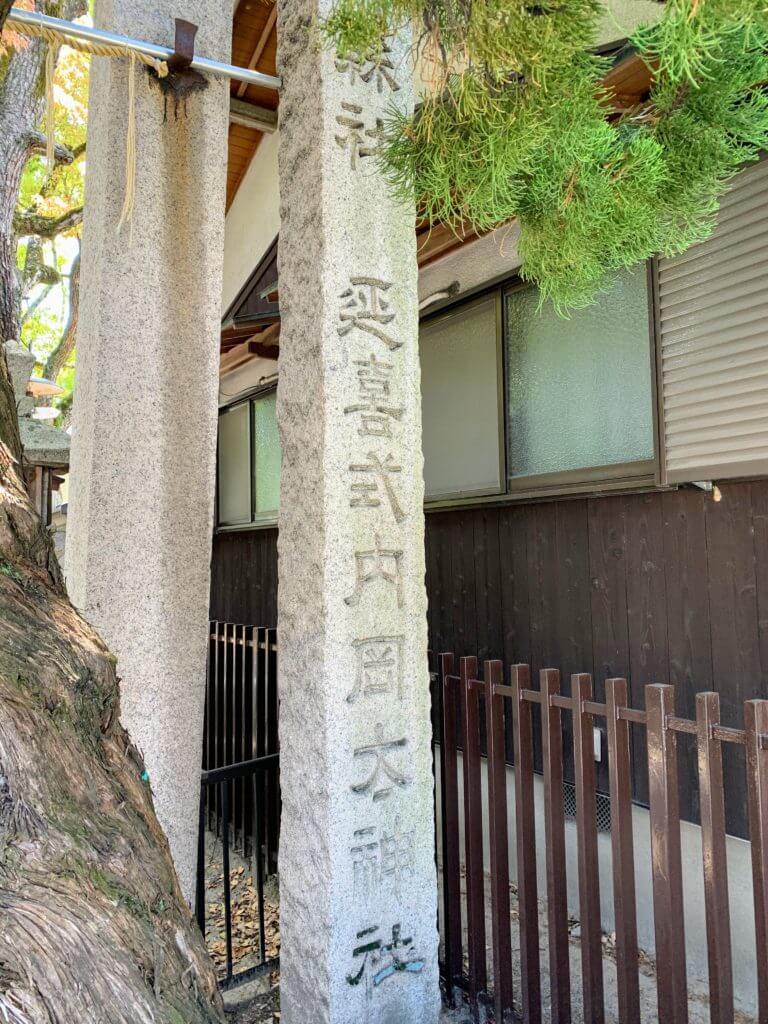
This is Okata Shrine.
Let’s go inside.
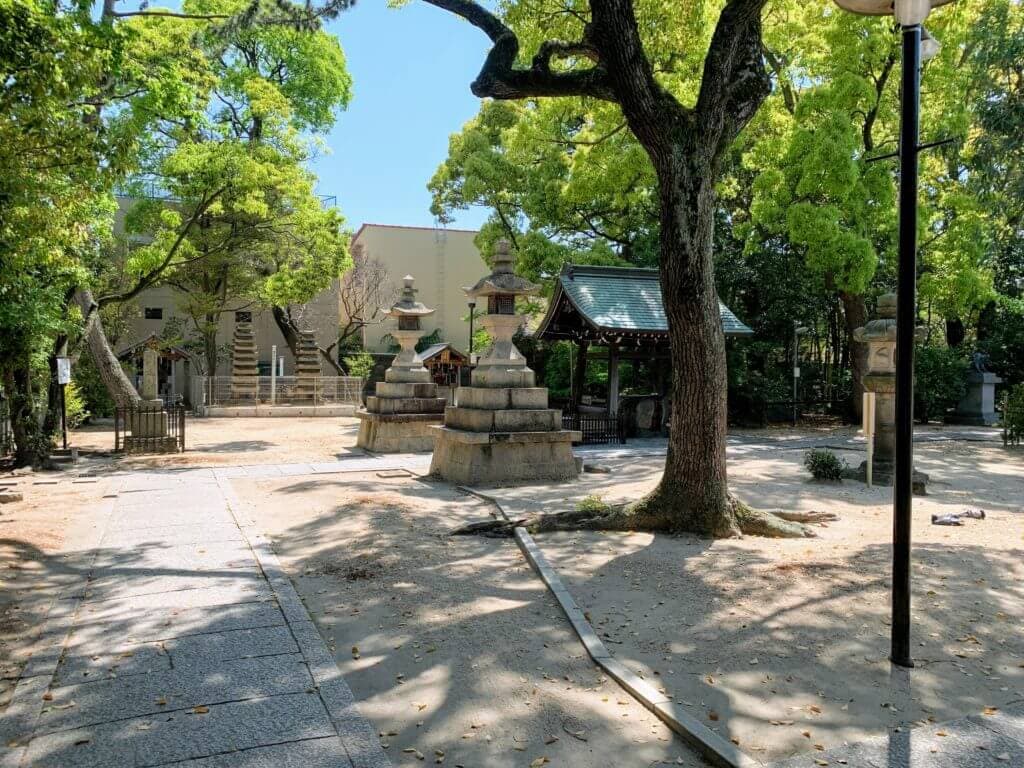
This is what the shrine grounds look like.
You can see a memorial tower toward the back left of the photo.
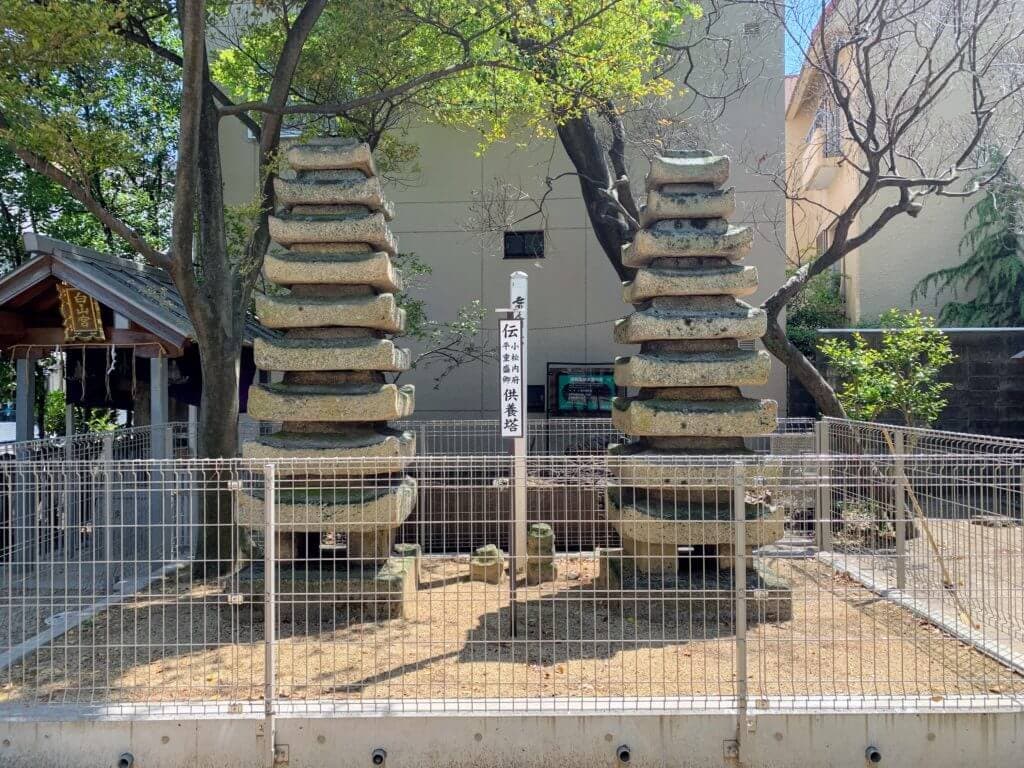
This is the memorial tower for Taira no Shigemori.
There is a stone monument behind it.
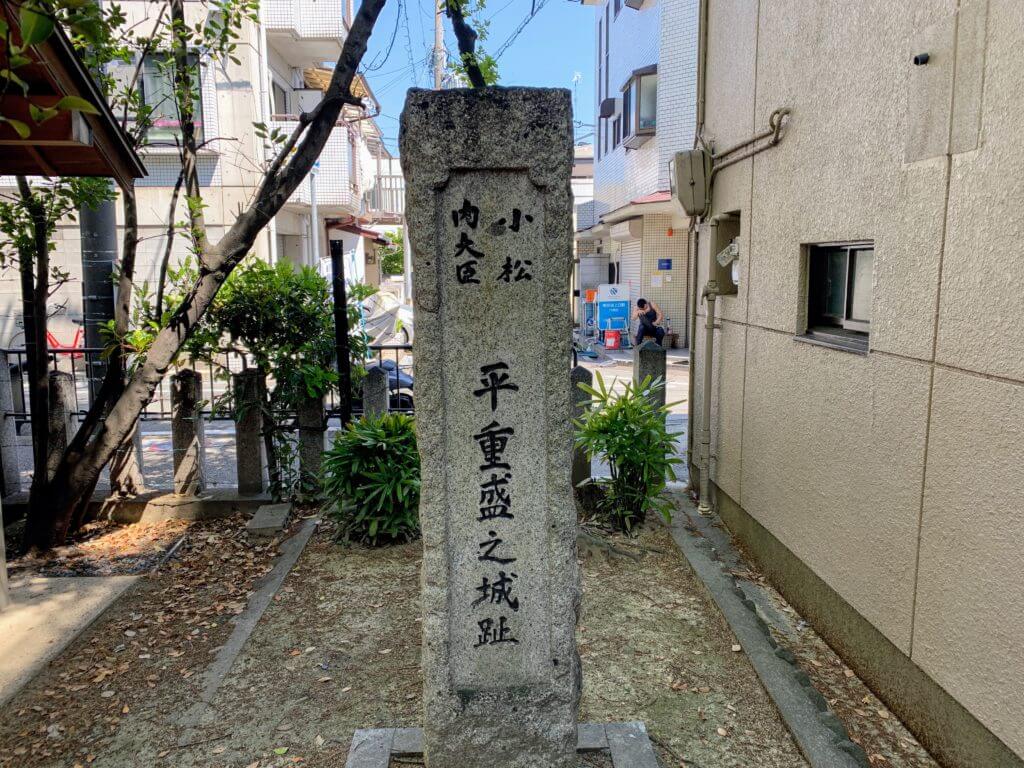
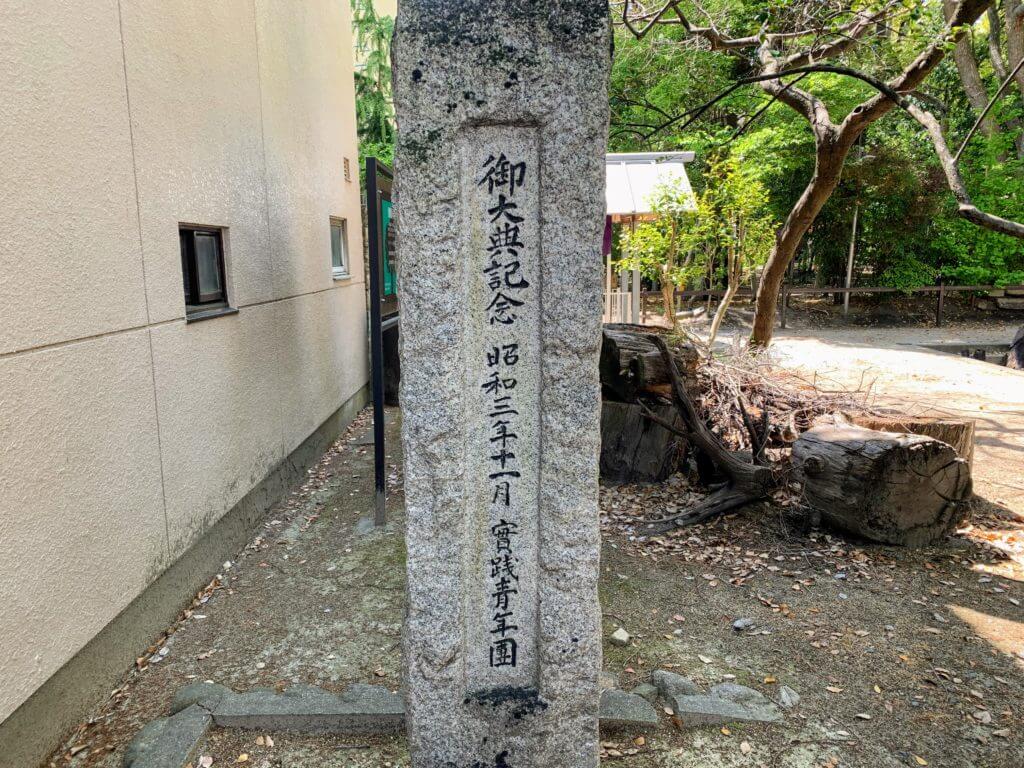
This is the stone monument for the “Site of Taira no Shigemori’s Castle (Komatsu Castle Site).”
Taira no Shigemori was a military commander of the Heian period. Because he lived at Rokuhara Komatsu-dai, he was also known as “Komatsu-dono” and “Komatsu Naidaijin,” and one theory says this is the origin of the local place name “Komatsu” here. There is also a theory that says otherwise.
Castles from this period were not the grand castles with keep towers that we associate with the Sengoku period. They are said to have been more like forts.
By the way, the exact location of Komatsu Castle is not known, but the castle itself was not located on this spot.
This stone monument used to be in a different location and was moved here when an apartment building was constructed.
Aside from this monument, nothing remains to show that a castle once existed, but that only leaves more room for the imagination.
Since we’re here, I’d also like to introduce Okata Shrine mainly through photos.
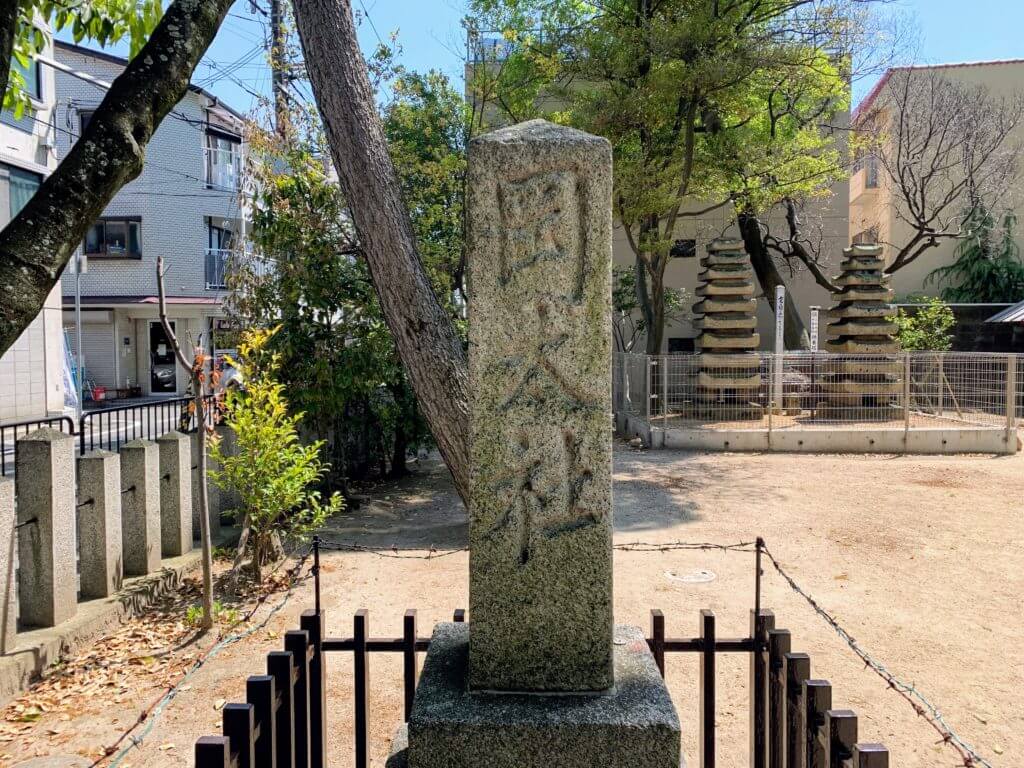
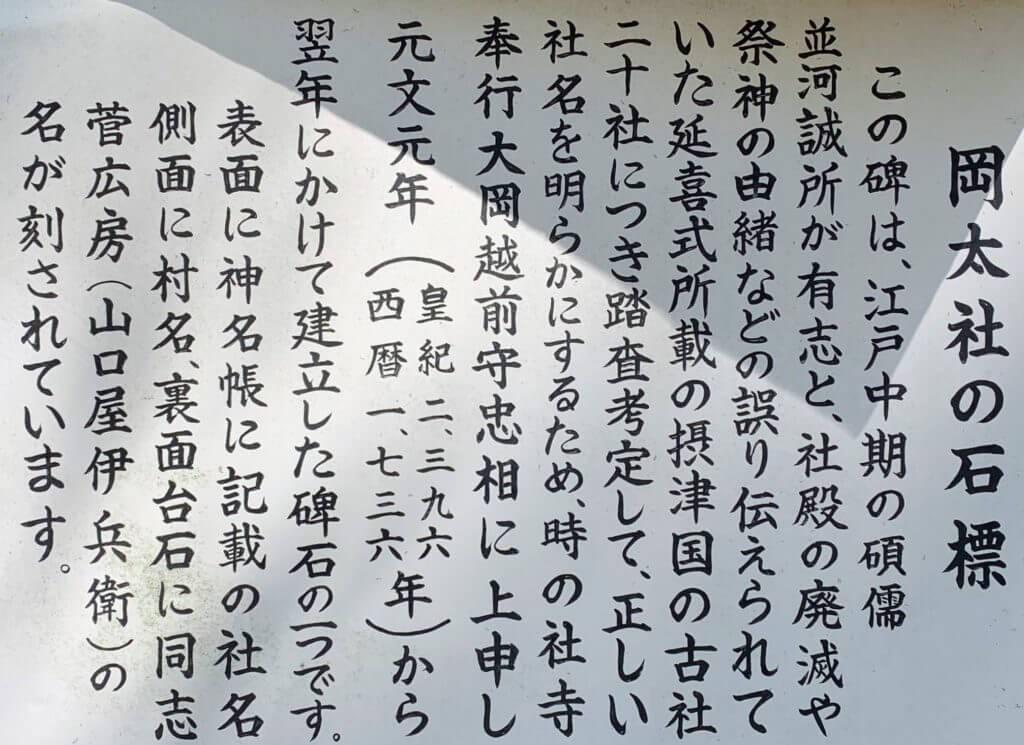
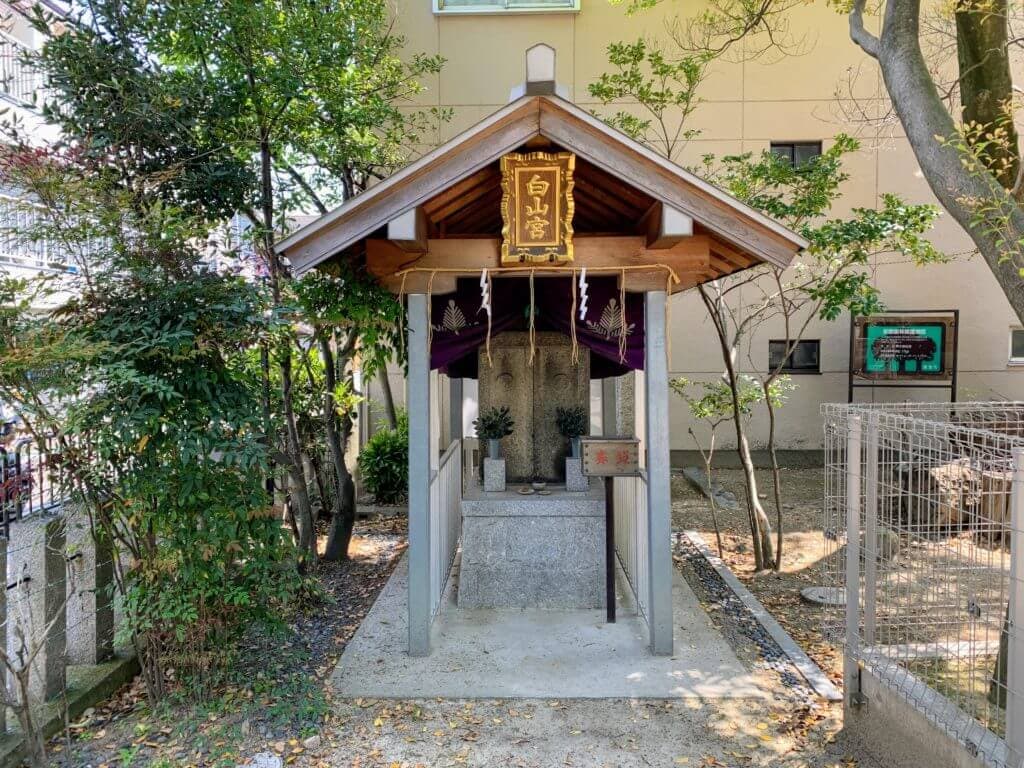
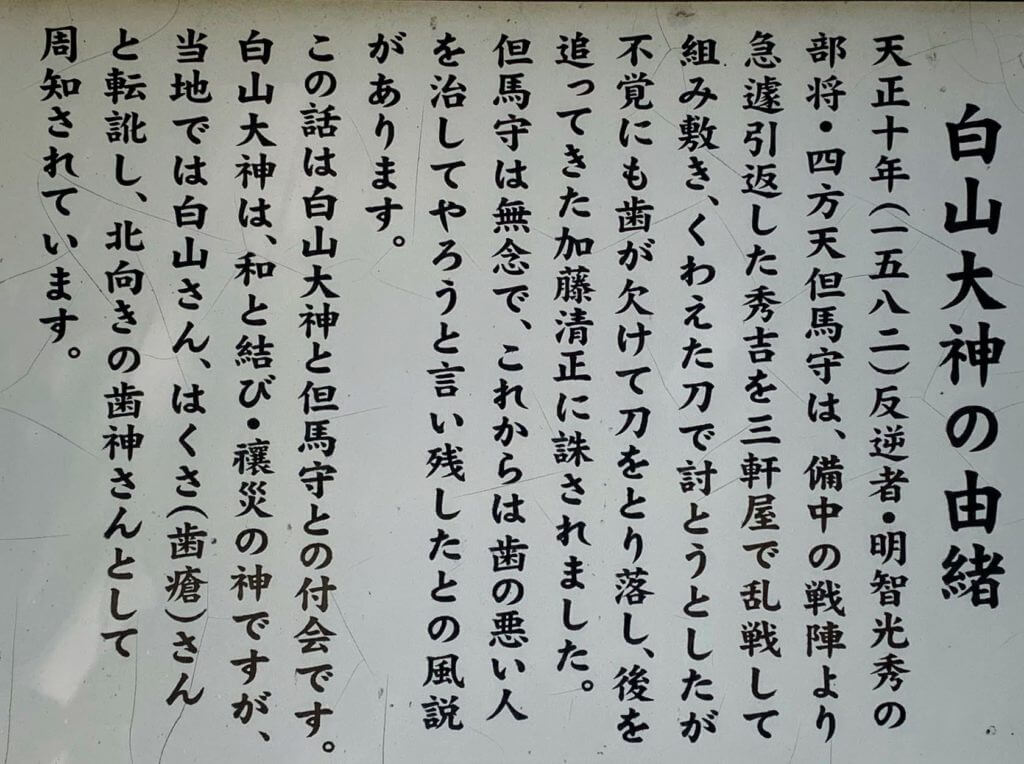
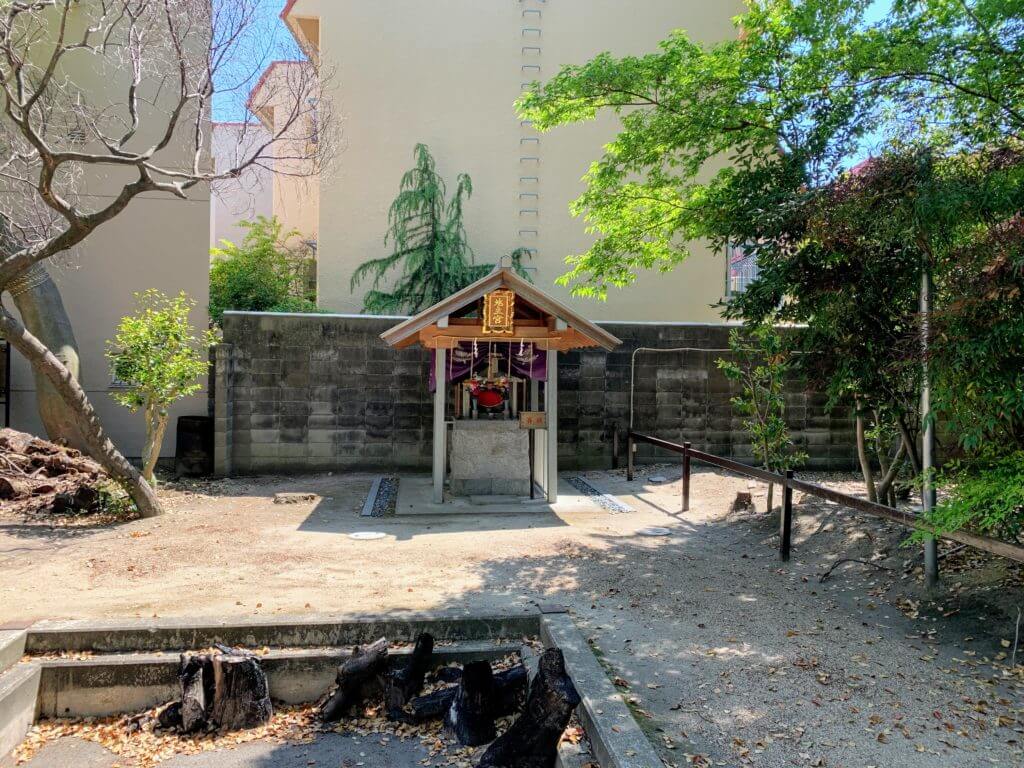
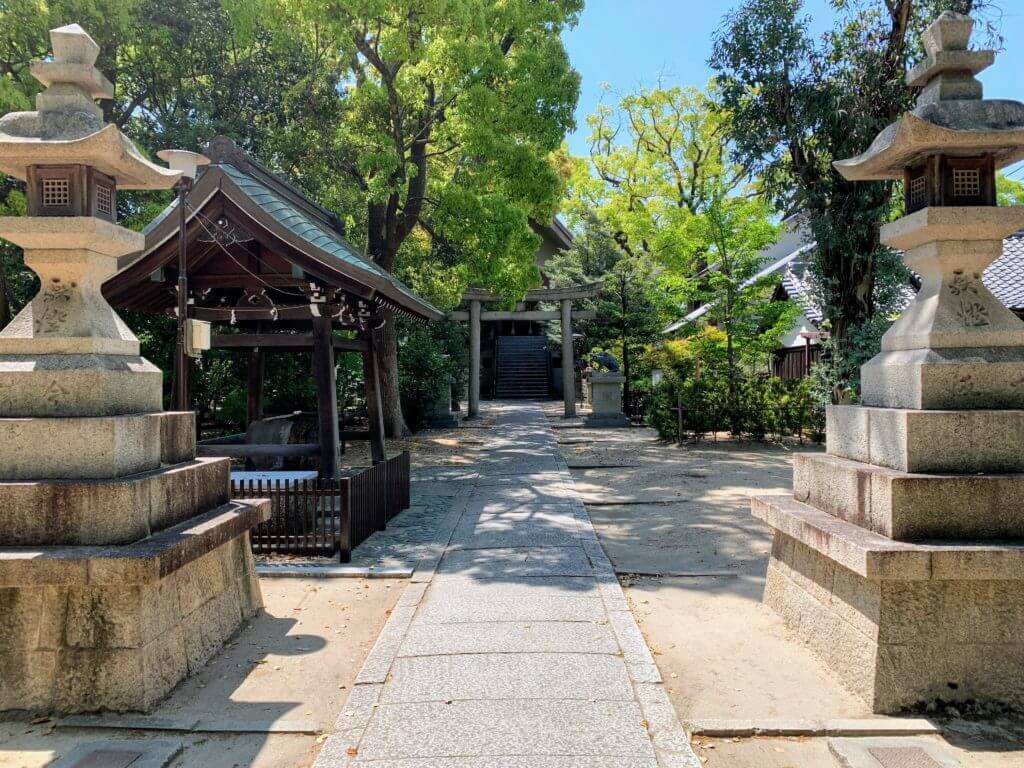

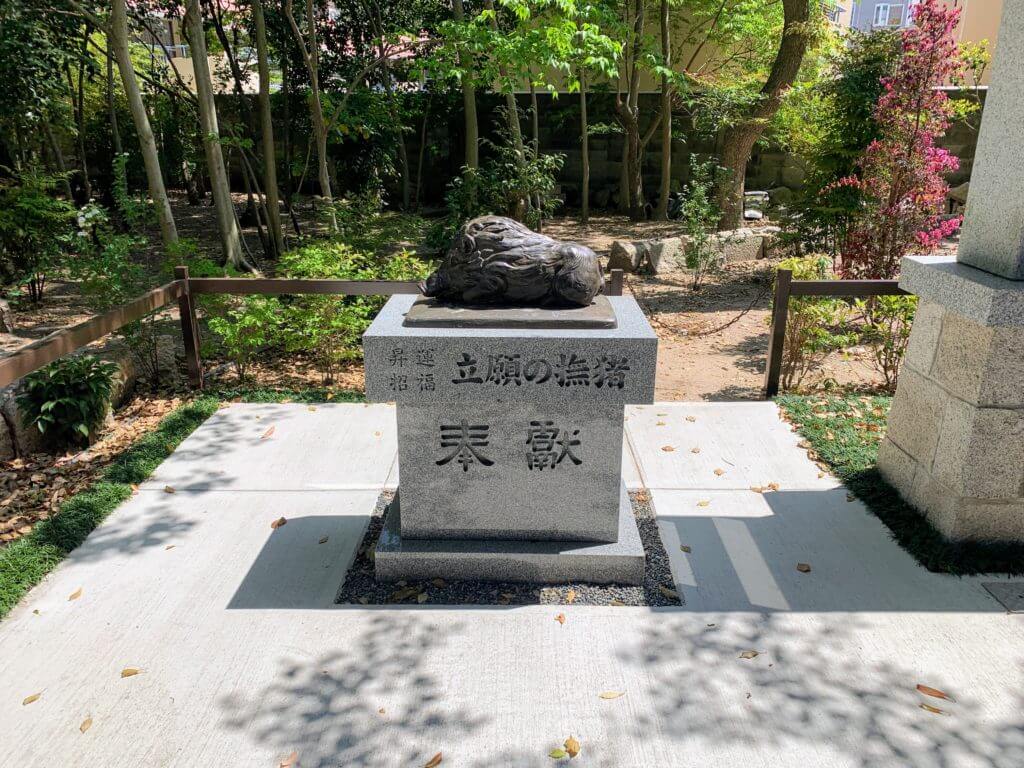
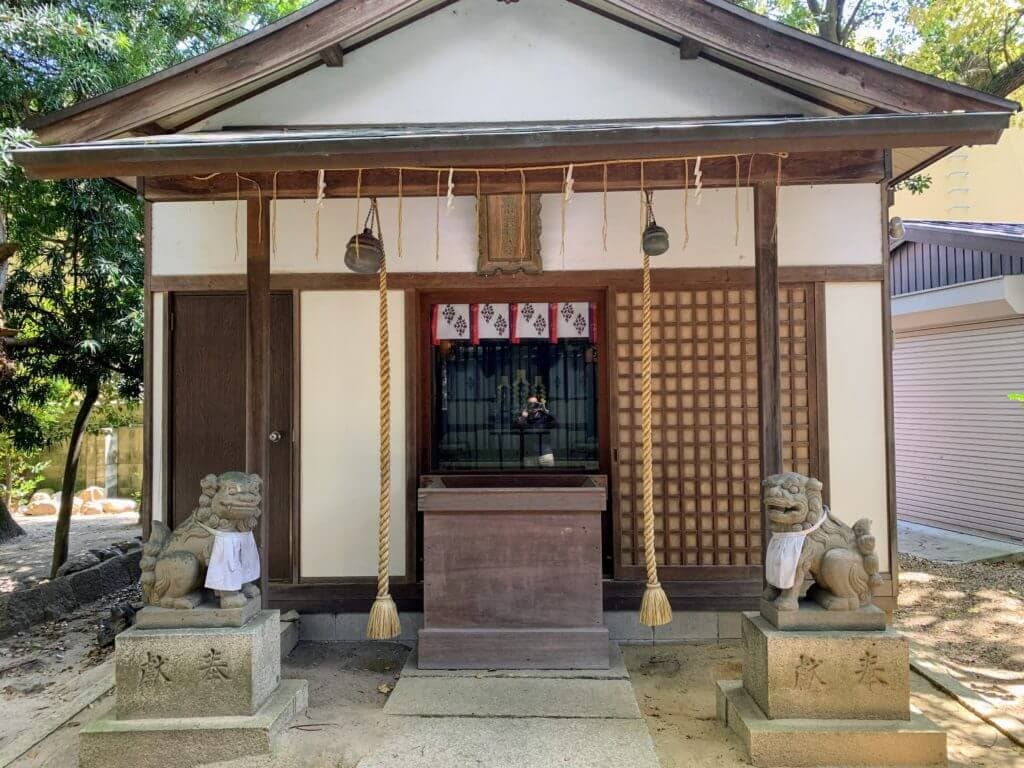

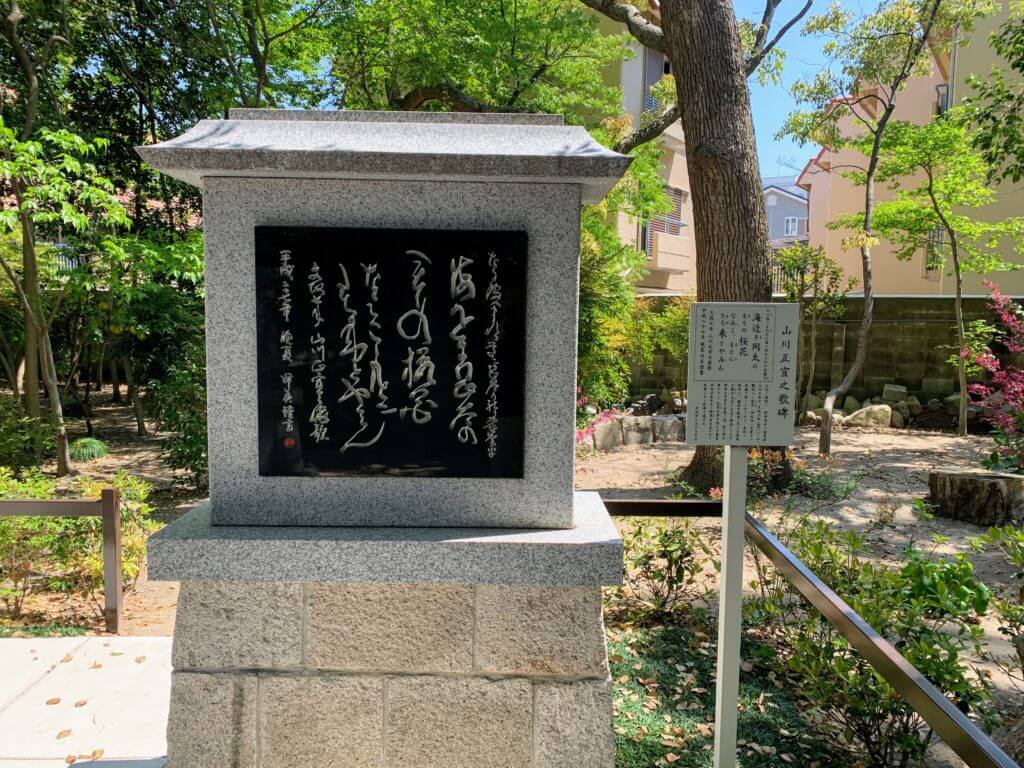
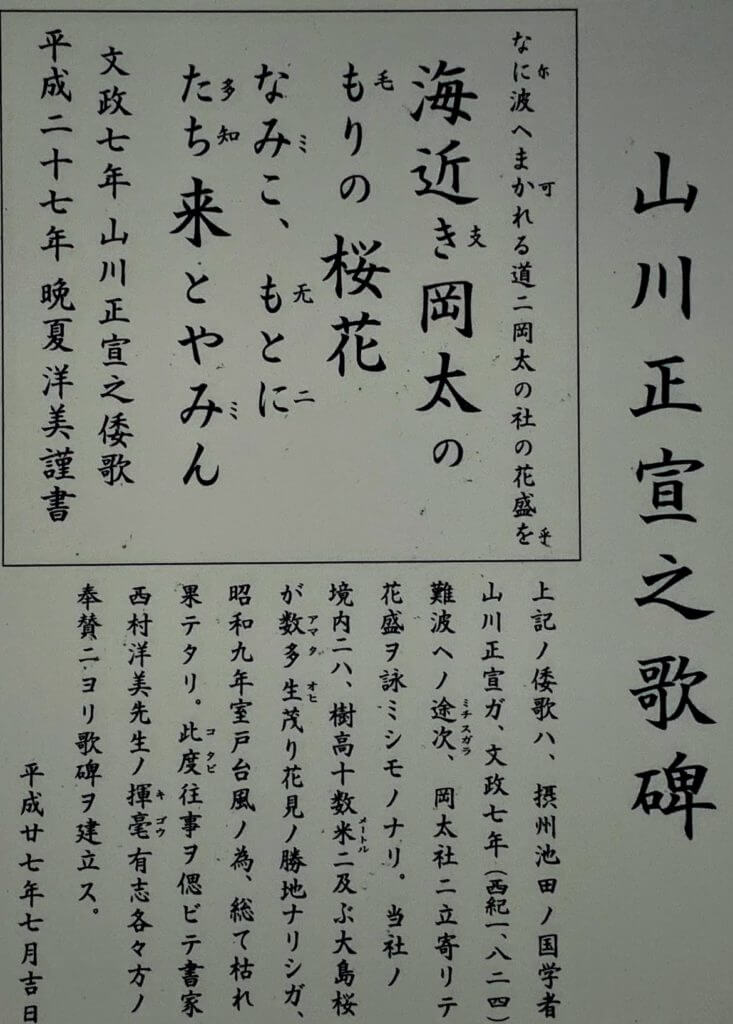
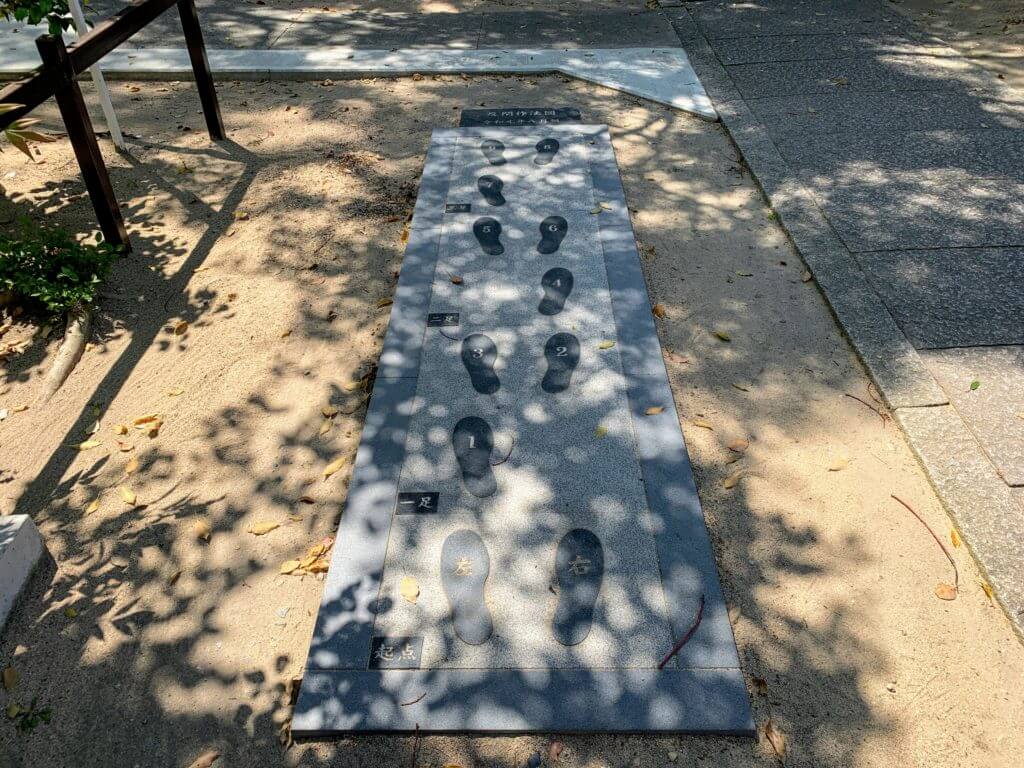
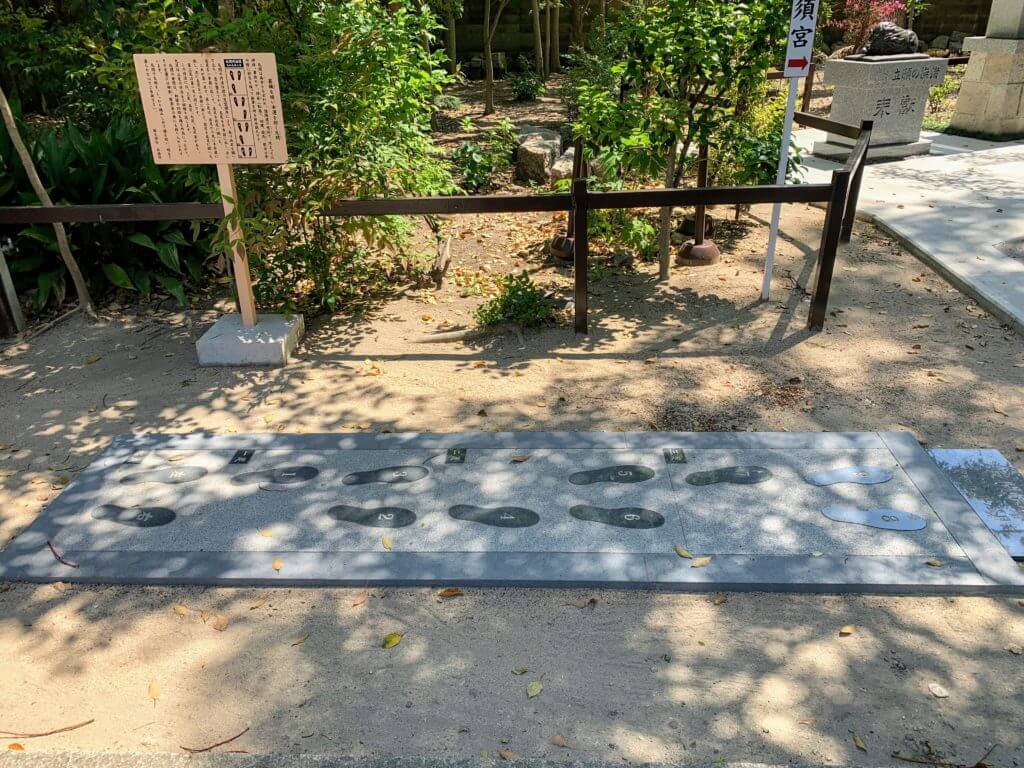
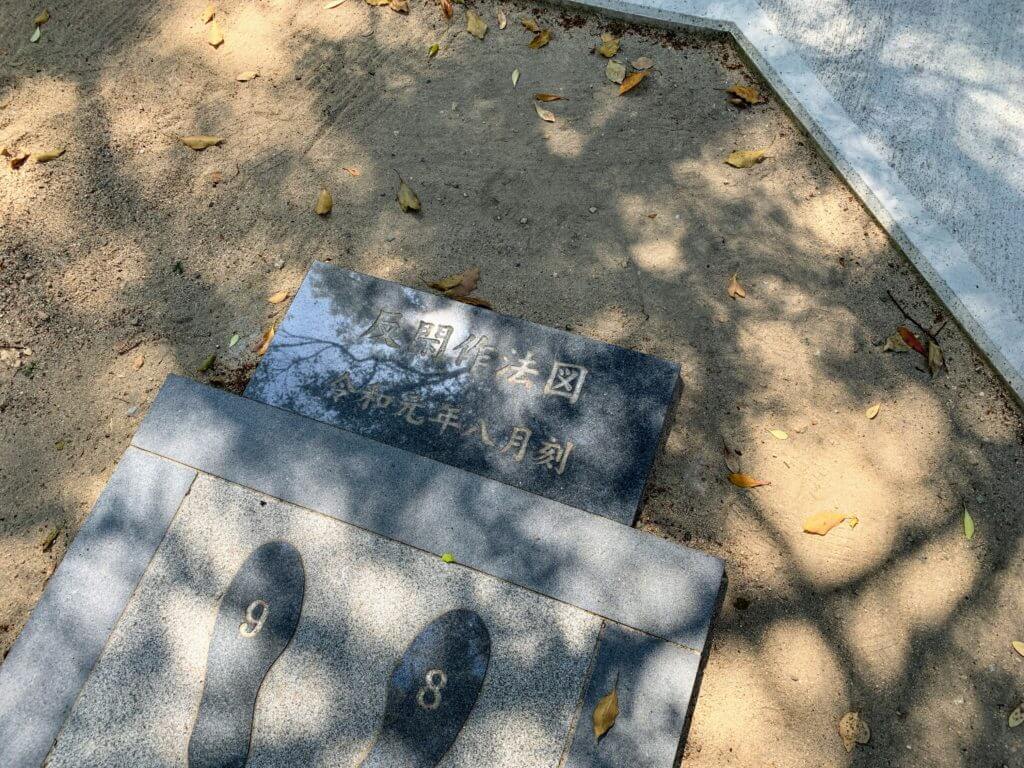
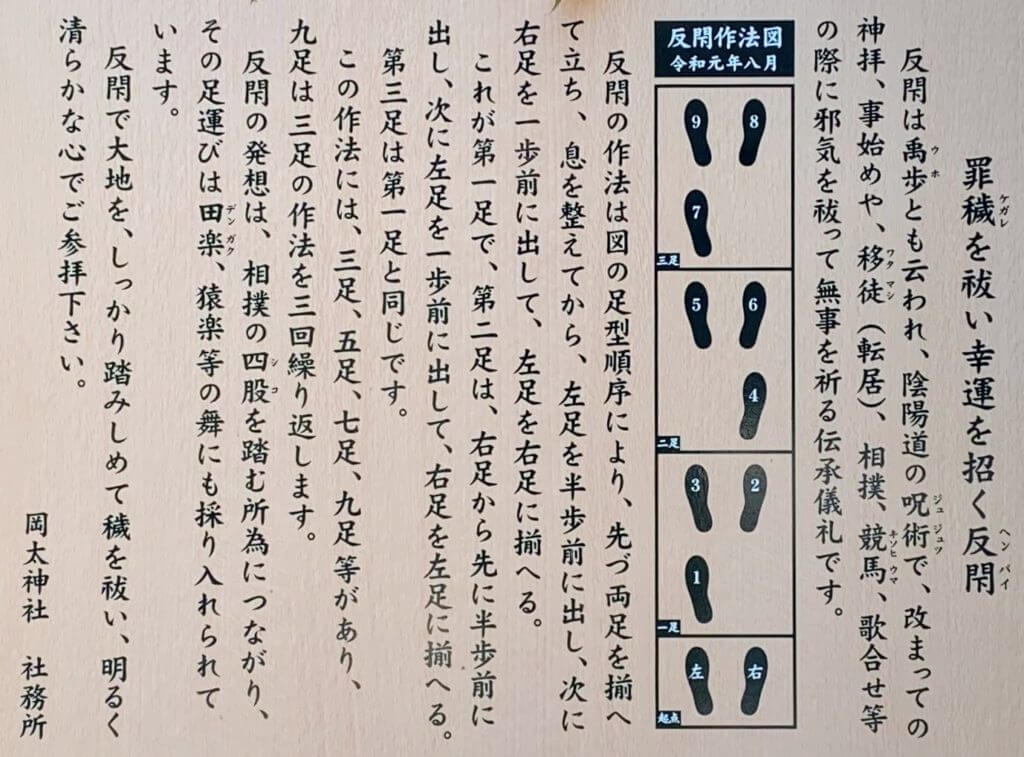
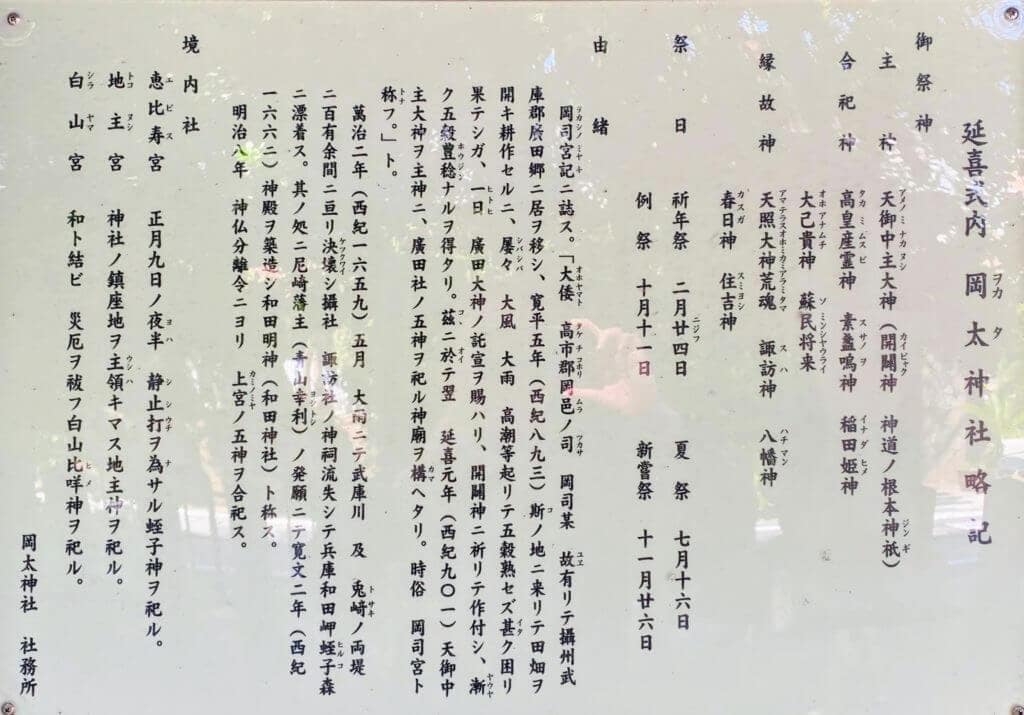
The details of Okata Shrine are as shown above, and Ebisu is also enshrined within the grounds.
It is said that Ebisu, originally Hiruko, came from the sea off Naruo and was later enshrined at Nishinomiya Shrine. In addition to Nishinomiya Shrine, Ebisu is also enshrined here and at Koshien Susanoo Shrine.
There is also a shrine called Okada Shrine, with the same reading, on the campus of Kobe College. It is unclear which of the two shrines is the “Okata Shrine” listed in the Engishiki Jinmyocho, a nationwide register of shrines. Cases like this are referred to as “ronsha,” or disputed shrines.