



Here’s the “Nishinomiya Quiz,” where getting it right proves you’re a true Nishinomiya insider.
Here’s this round’s question↓
Q. How many lanes did National Route 43 have when it was first built?
a. 4 lanes
b. 6 lanes (same as today)
c. 8 lanes
d. 10 lanes
Nishi2 correct answer rate: 33%
The correct answer is d, “10 lanes.”
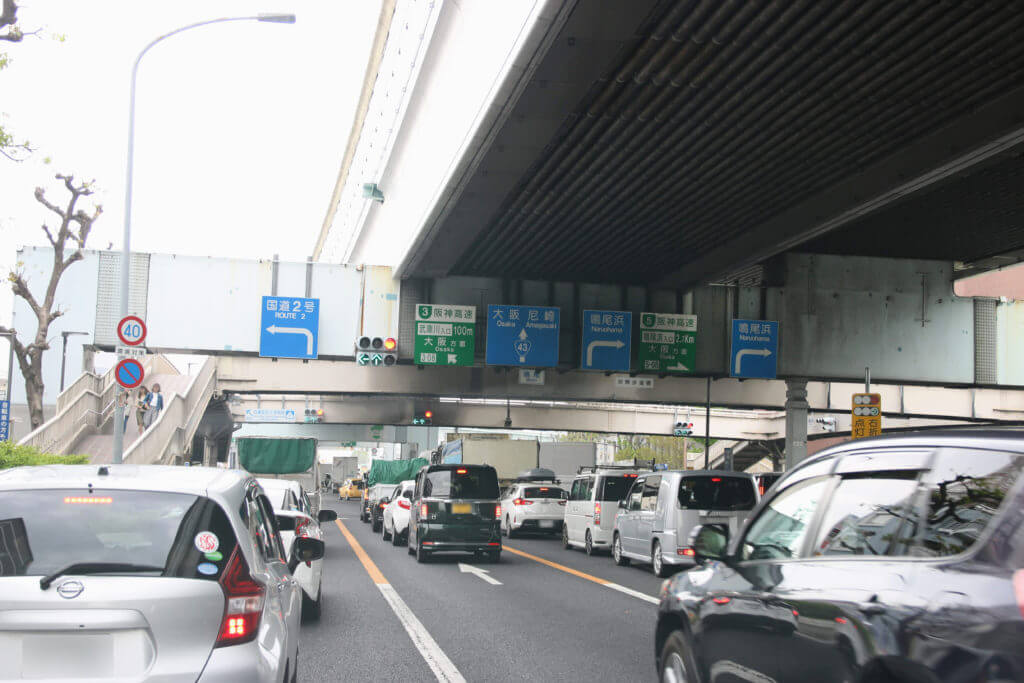
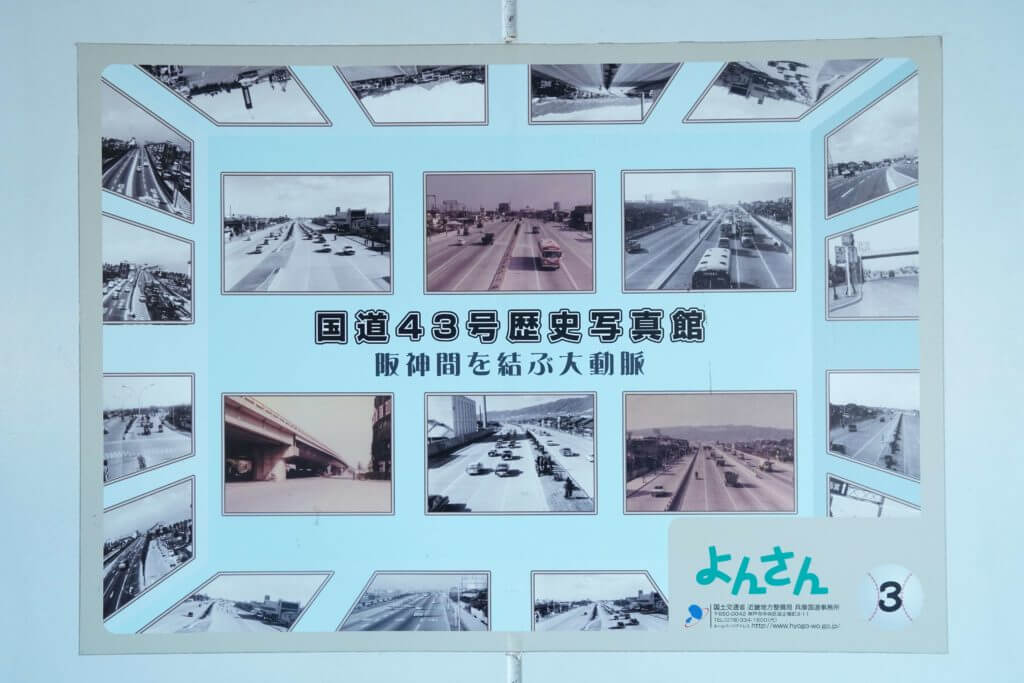
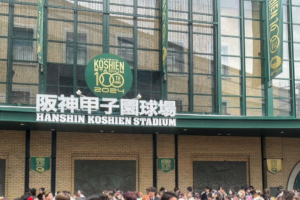
The source is the “National Route 43 Historical Photo Gallery” on the wall beneath the elevated section of National Route 43 near Hanshin Koshien Stadium.
目次
Apparently the plan was approved in Showa 21
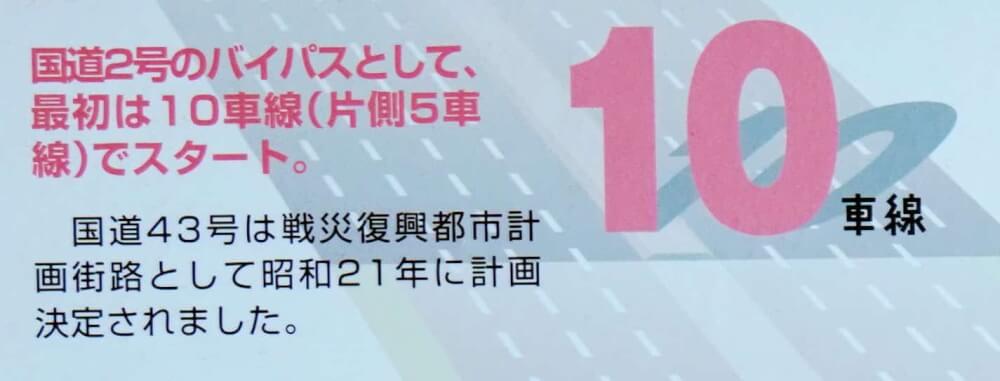
It seems the road was planned in Showa 21.
The section that opened was apparently the 18.2 km stretch from Amagasaki City to Nada Ward in Kobe City in Showa 38.
At the time, it reportedly opened with 10 lanes (5 lanes in each direction).
Incidentally, after looking into it, it seems there are currently no 10-lane roads in Japan.
At present, the maximum is 8 lanes, found on part of Midosuji in Osaka.
Before today’s 6 lanes, it had 8 lanes
The 10-lane layout was essential during Japan’s period of rapid economic growth, but as the environment worsened, it was apparently reduced to 8 lanes in Showa 57.
At that time, one lane on each side was converted into a green belt as a measure to reduce noise.
Then in Heisei 10, it became the current 6-lane road. The reason was apparently that traffic volume had decreased after the opening of the Hanshin Expressway Route 5 Bayshore Line.
At the time of construction, it was called the Second Hanshin National Highway
When National Route 43 was built, it was apparently called the “Second Hanshin National Highway,” and was known as “Nikoku.”
Going back further, the Hanshin National Highway (National Route 2), which opened in Showa 1, was called “Hankoku”.
So, because a second Hanshin National Highway was being built, it became the “Second Hanshin National Highway”.
As for why the names Hanshin National Highway later became National Route 2 and National Route 43, it seems this was because national highway numbers began to be assigned under the new Road Act promulgated in Showa 27.
Today, some people call National Route 2 “Nikoku,” but back in the day, Route 43 was the one called “Nikoku.” That’s pretty moving.
In Closing
National Route 43 apparently incorporates the latest technologies, including noise reduction measures. Details are written on the wall beneath the elevated section of National Route 43 by Koshien Stadium, so if you’re interested, go take a look.
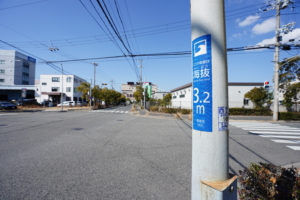
Here’s the map for the “National Route 43 Historical Photo Gallery”↓






昔々 西宮では小学校連合体育大会?なるものがありました。中学校もありました。小学校5年から中学校3年までの市内の小学校生・中学校生が一同に集まり運動会をしてました。小・中は別の日でした。開催場所は甲子園球場でありました。私は小学校5年の時初めて参加しました。昭和36年のことです。通ってた小学校に集合し、阪急電車で今津まで行きそこから工事中の後の43号線を歩いて甲子園まで歩いたのを覚えています。工事中とは言ってもほとんどほったらかしで真ん中を歩いたのでした。懐かしいなぁ!
昭和36年というと、完全に工事中まっただ中なんですね!
運動会についてなんと調べたところ、現在も行っているようです。
「第59回西宮市立小学校連合体育大会」
https://www.nishinomiya-school.jp/181106esrengotaiikutaikai/
中学校も続いているようです。
https://www.nishinomiya-school.jp/181108jhrengotaiikutaikai/
場所も変わらず甲子園球場です。さすが西宮ですよね。