


“My child is still in the younger kindergarten class,
and I’m trying to have them study all kinds of things before elementary school, but teaching them is hard.”

“It really is. And these days there are so many different ways to teach, too.
It’s hard to know what’s right.”
“Lately, people say that if kids don’t develop thinking skills,
they’ll have a hard time in the future.”
“Right, and starting this year, university entrance exams are supposed to test thinking and expression skills too.
Oh, what about this preschool learning center?”
Here’s what the two of them found↓
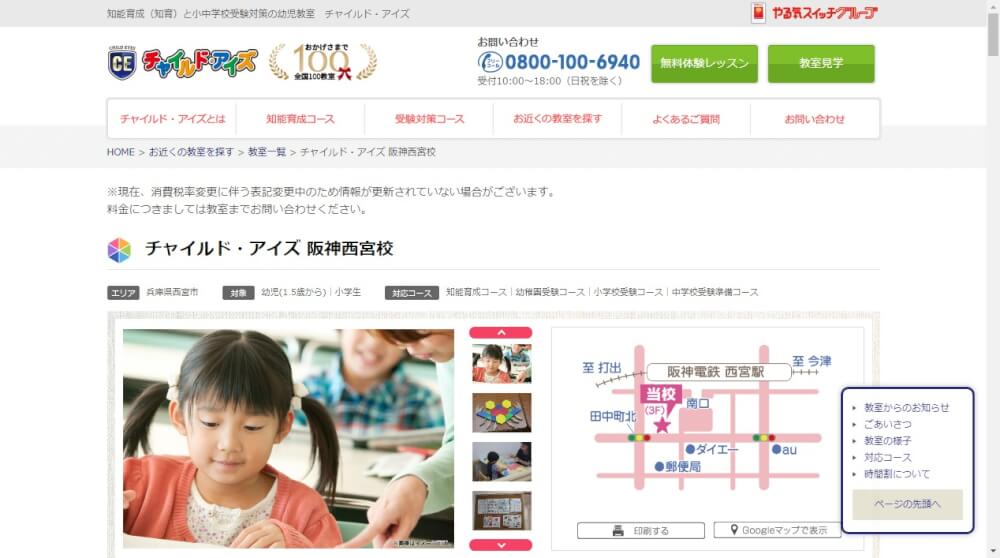
A preschool learning center at Hanshin Nishinomiya Station
“Child Eyes,” where children develop thinking skills and character
It’s part of the Yaruki Switch Group, famous for School IE.
This is Child Eyes Hanshin Nishinomiya School↓

It’s on the 3rd floor of this building.
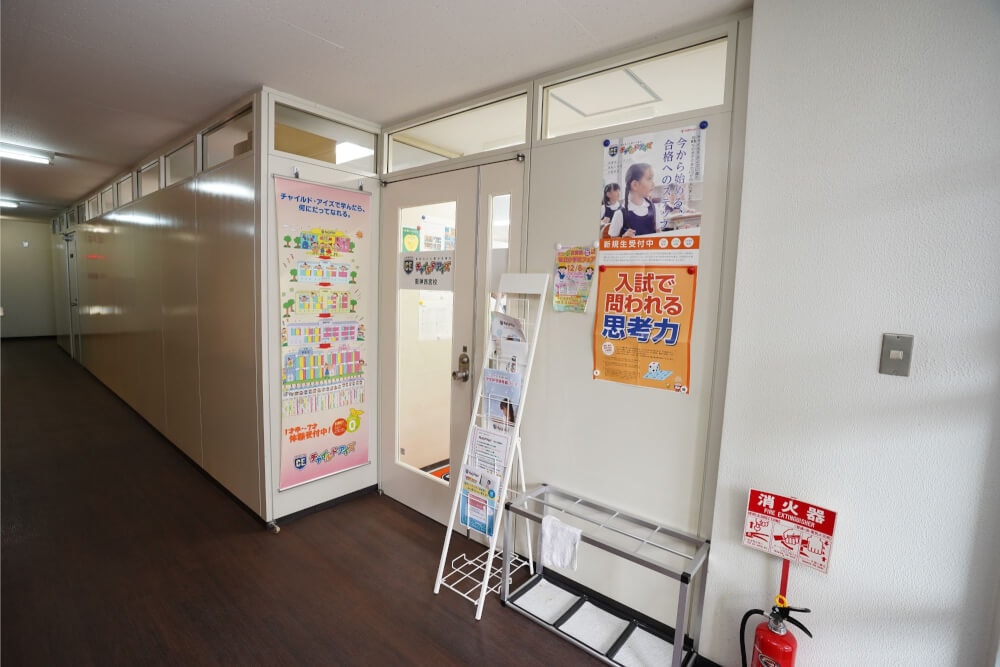
Now, let’s go inside.

What surprised me when I walked in was the huge world map!
Apparently, every classroom in the Yaruki Switch Group has this big world map.
目次
We Went Inside the Classroom
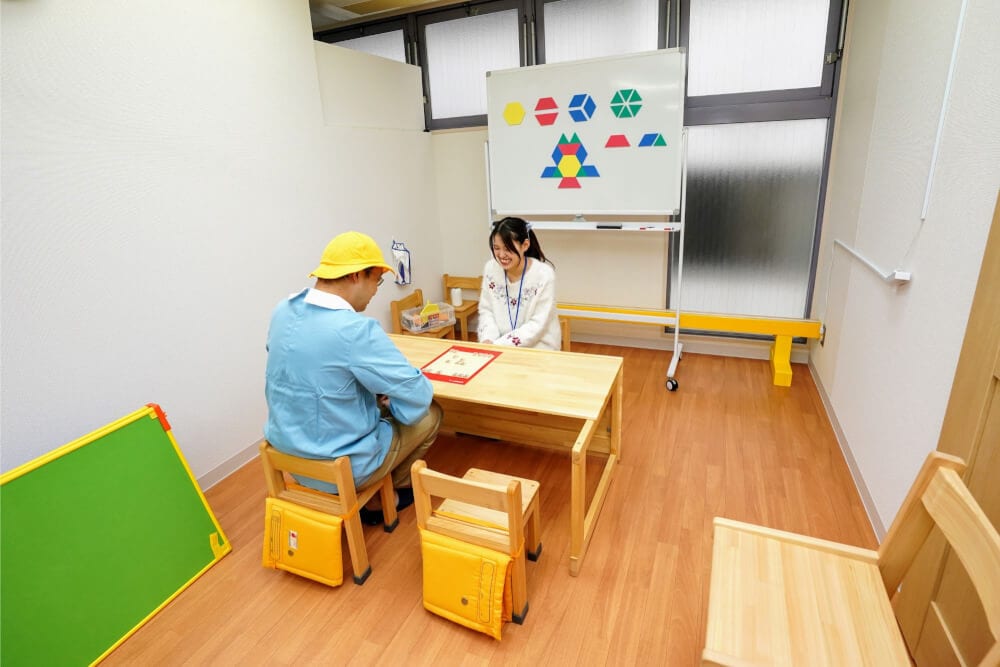
Here’s what the classroom looks like↓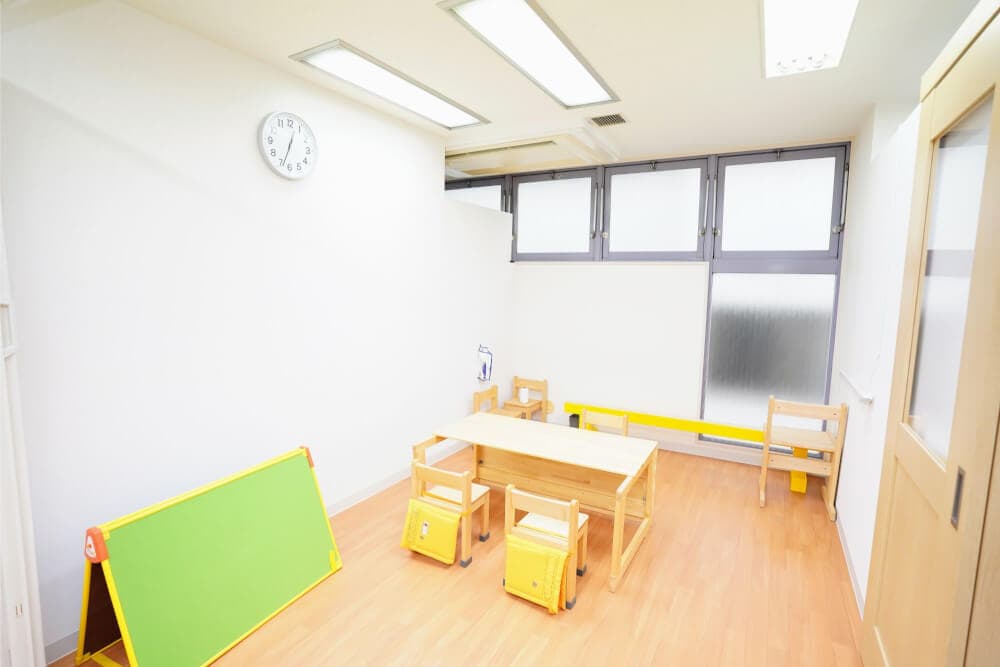
It had just opened in May, so it’s a very clean and beautiful classroom.
Here’s another classroom↓
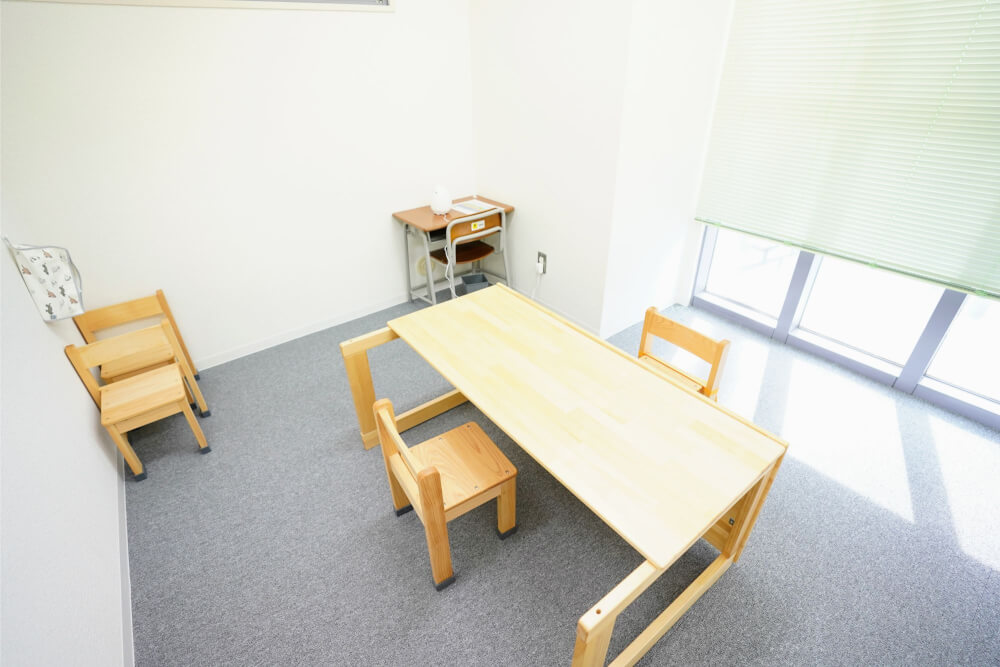
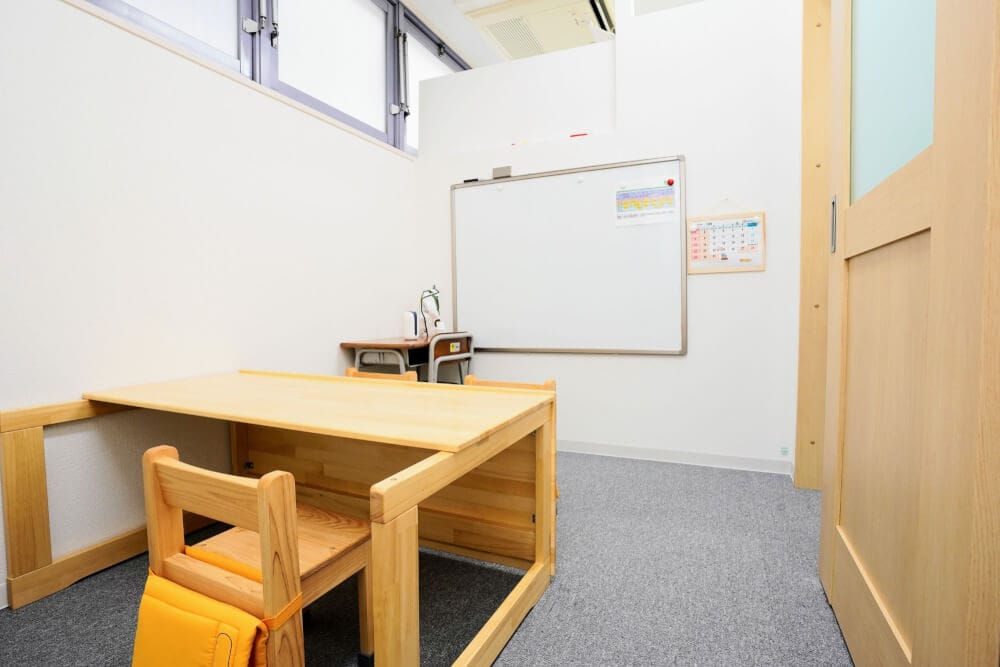
Since classes are kept small, the classrooms are compact.
Daa Tried Out a Lesson
So this time, Nishinomiya Tsushin member “Daa” tried out a lesson↓
This is called “Number Shogi,” a version of hasami shogi that uses addition.
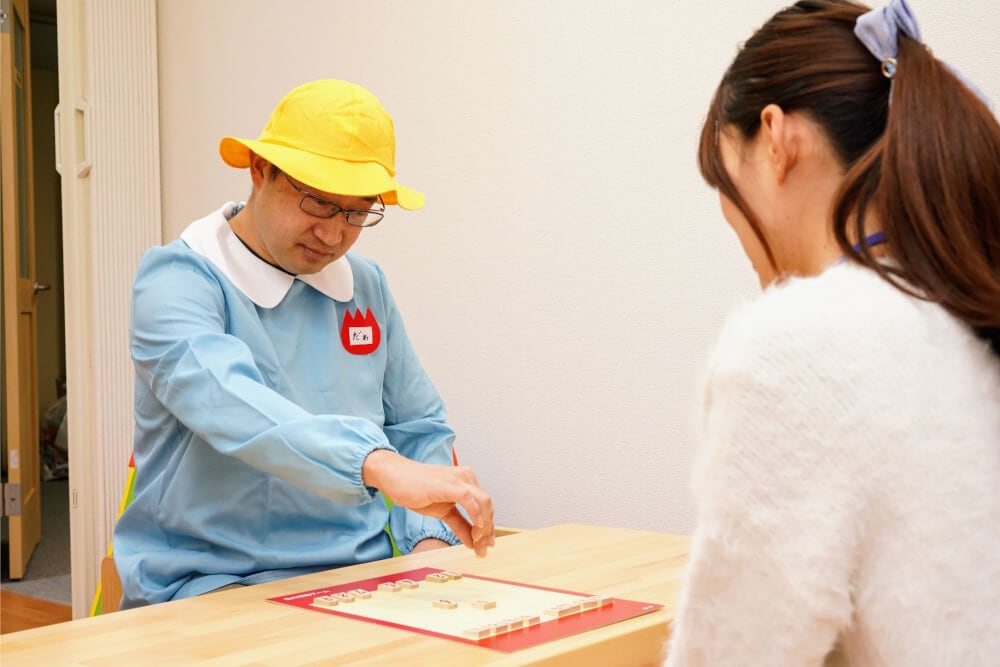
It feels like playing a game, so even adults can get totally absorbed in it. For kids, it seems like a natural way to build calculation skills.
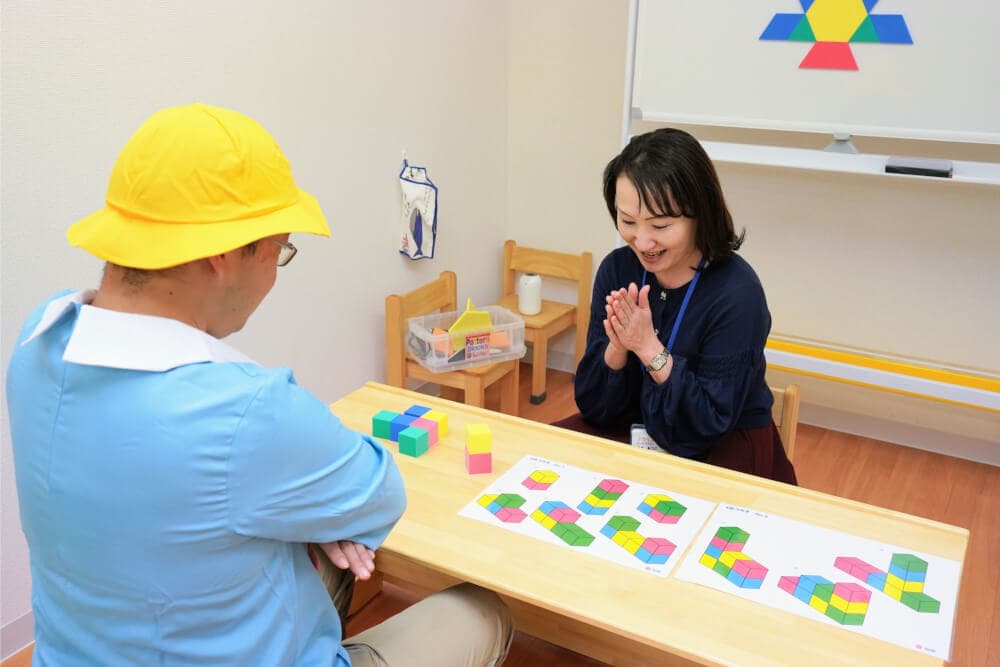
This is a learning material where children stack blocks shown on a backing sheet. It looks like it helps develop a sense of three-dimensional shapes, an area where differences in math ability often show up.
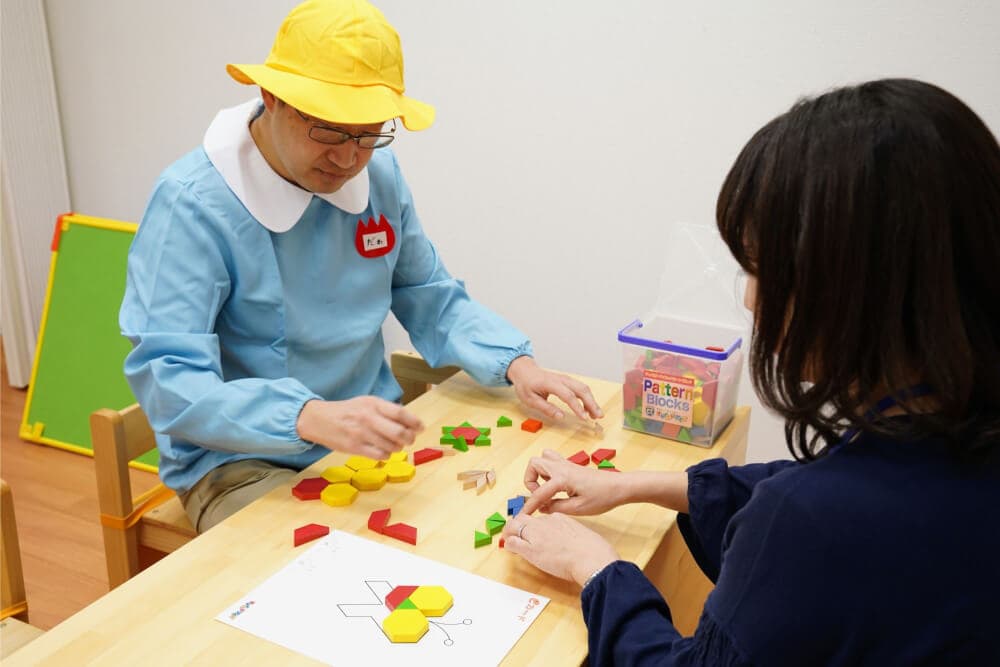
These are “pattern blocks.” Children can match blocks perfectly to the backing sheet,

or create freely, which seems like it would boost imagination and expressive ability. By the way, Daa made Nishinomiya’s city emblem.
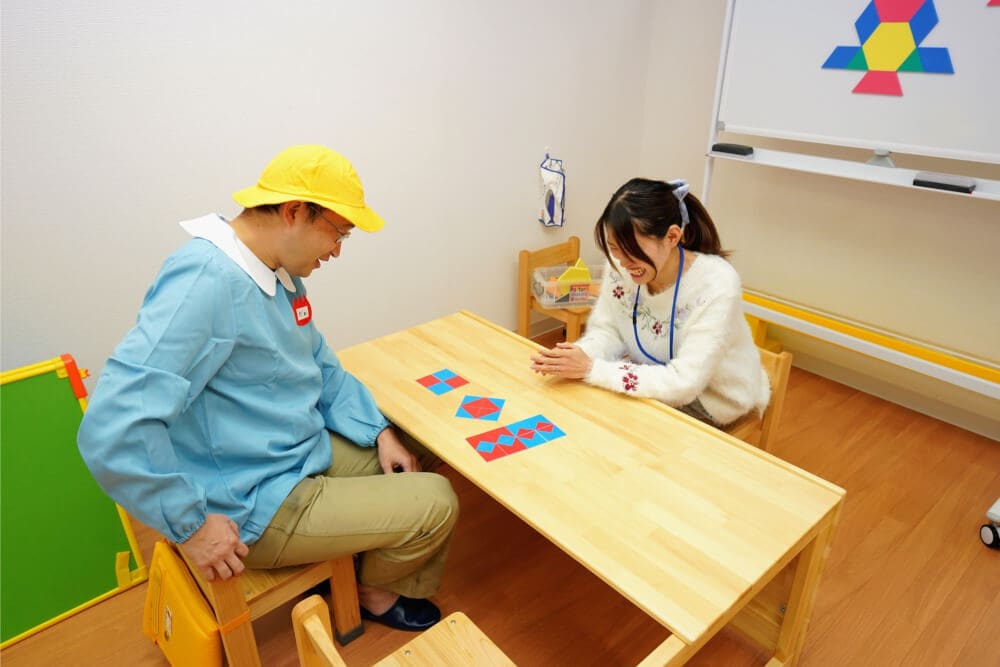
All of the learning materials are fun enough that children naturally get absorbed in them, so I thought they would naturally develop concentration and thinking skills.
How to Keep Children from Disliking Studying Once They Enter Elementary School
We asked Okuyama-sensei, the manager of the Hanshin Nishinomiya School, to tell us more about Child Eyes.


“Around the 2nd or 3rd grade of elementary school, children tend to split into those who like studying and those who dislike it. How was it for you, Niko-san?”
“Hmm, I was average. Haha. But if anything, I guess I liked studying.
But why do some kids come to like studying while others dislike it?”
“There’s data suggesting that this is related to how much stimulation the brain receives during early childhood.”
“Brain stimulation? What kind of stimulation?”
“At Child Eyes, we provide intellectual education that evenly stimulates three areas: shapes, symbols, and concepts (language).
For example, we show a child a piece of ‘paper’ and ask, ‘What is this?’
Niko-san, what is this?”
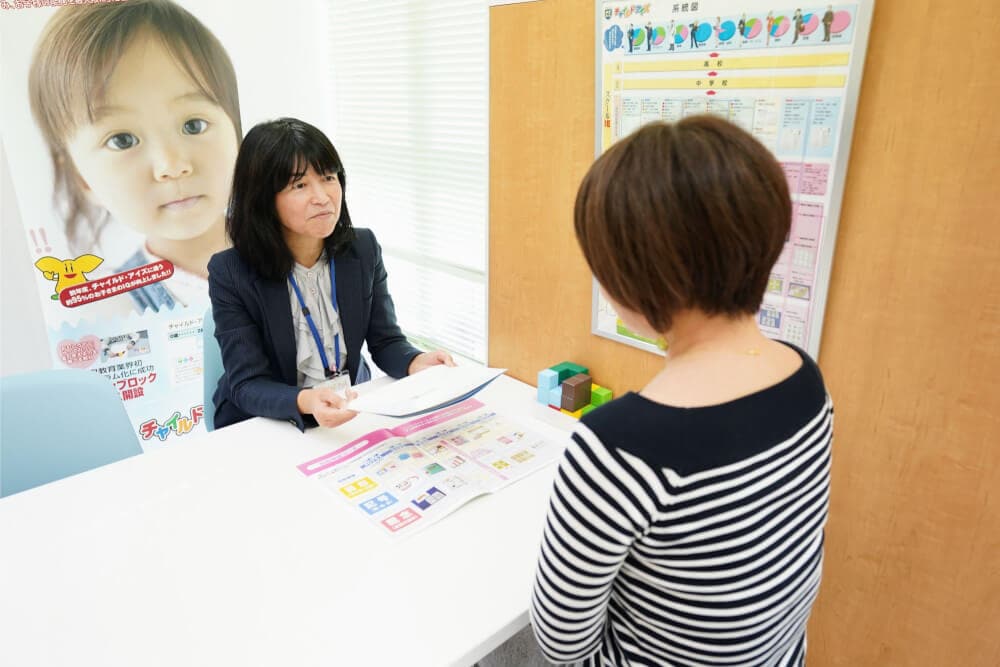
“…Paper??”
“Right.
But you can also associate it with many other things.
For example, ‘thin paper,’ ‘square paper,’ or ‘long, narrow paper.’”
“I see. So you get children to think in different ways.
Because they develop the ability to think, they’re likely to build a good sense for studying.
That’s why they don’t end up disliking studying.”
Even Young Children Can Learn Fractions
“At Child Eyes, children from the middle kindergarten class use a learning material called pattern blocks.”
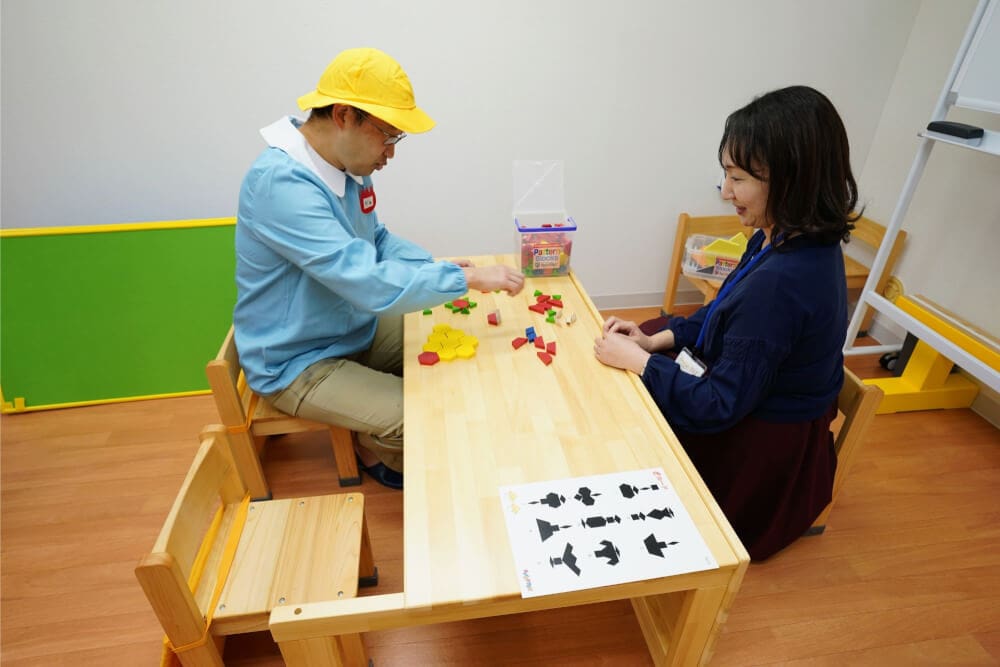
“These are blocks that form the foundation for understanding fractions,
and they’re also used at national and private elementary schools.”
“Wow. So they’re now being used in elementary schools too.”
“Children who use these pattern blocks become able to solve fraction problems like this without calculating.”